Own production
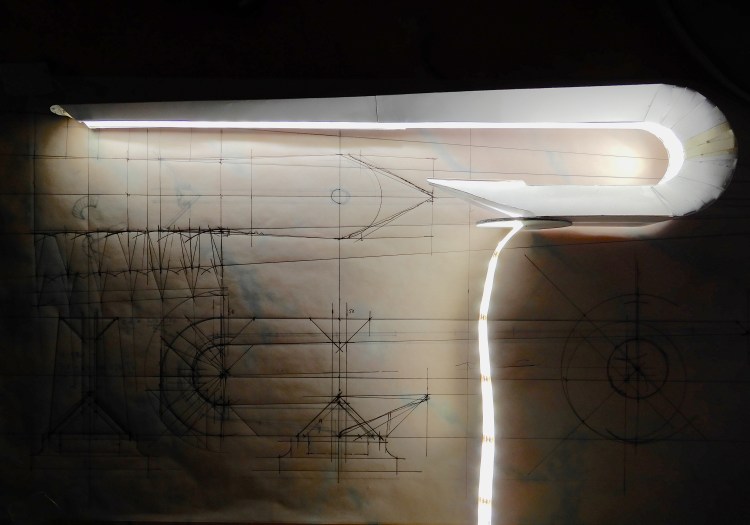
PIVOTING LED READING LAMP, 2018
To check the efficiency of masking LED glare (for QUILL & CEPPO lamps), I made this mock-up from photocopies of a drawing setting out the folds like a tailor’s pattern.
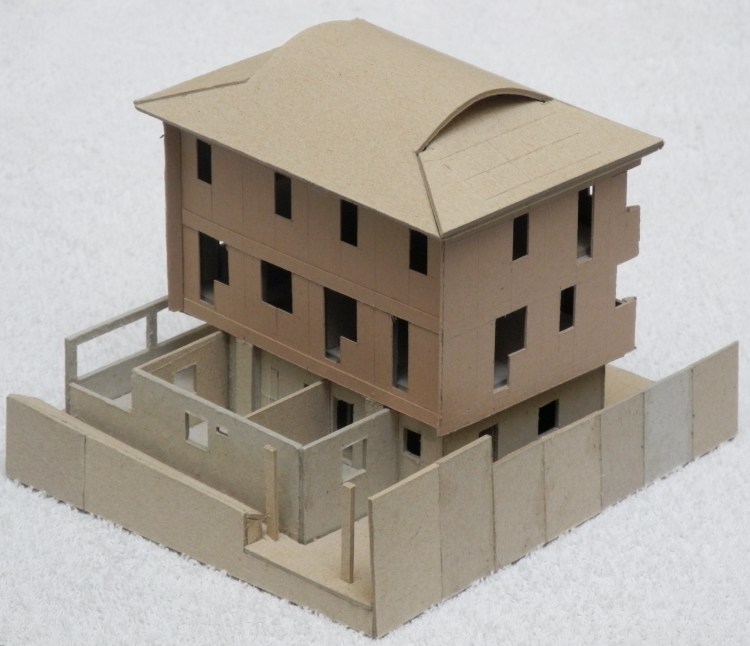
CASE STUDY HOUSE, GABON, 2013
My Owendo hosts had asked me in 2012 how they might extend their house, which I surveyed.
During their visit to Paris the following year I surprised them with a variably recomposable model, floor by floor.
To avoid any undue PI liability, I refrained from issuing any design documents.
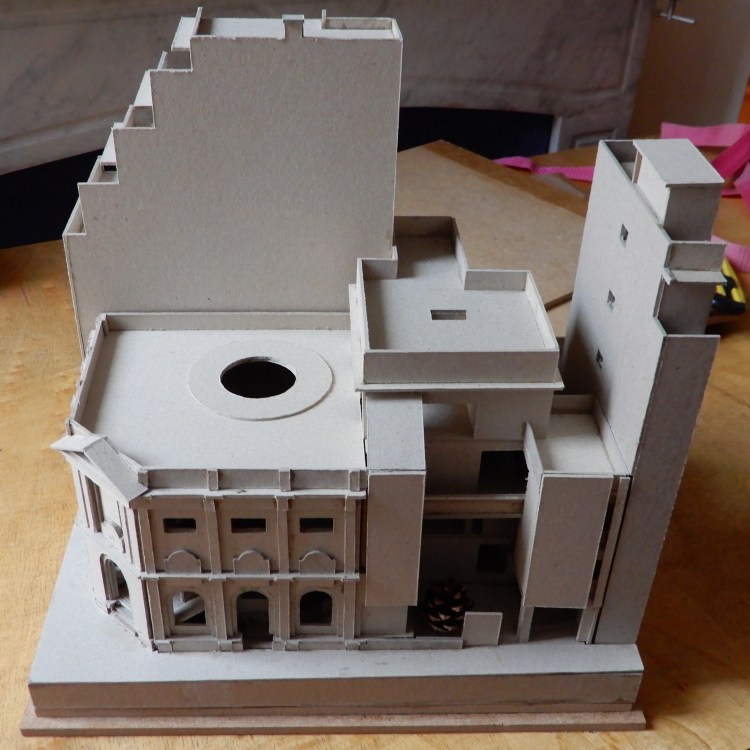
EEB, 13 r. VERNIER, NICE, 2012
Cardboard model, floor by floor, to illustrate potential development opportunities for the congregation.
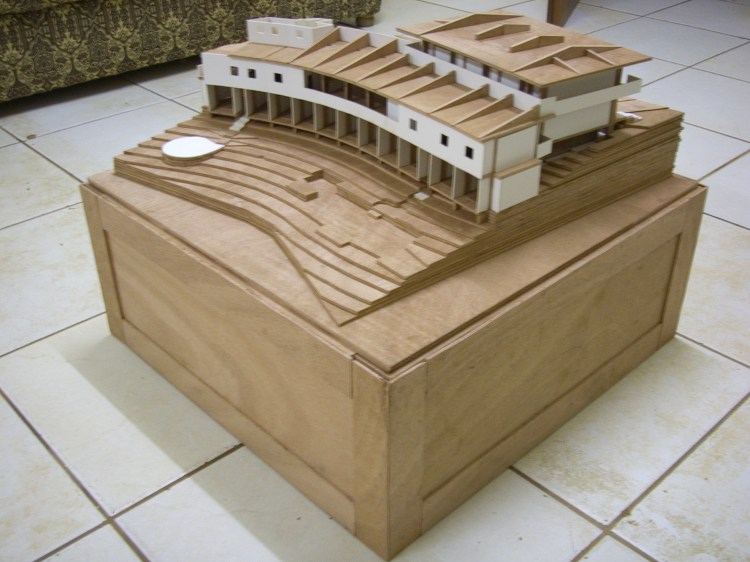
LA CITE DE PRIERE, GABON, 2011
Model and case built of plywood and cardboard.
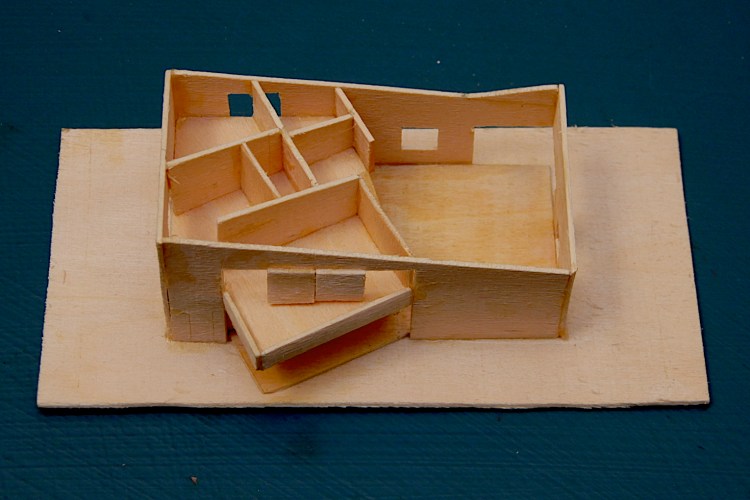
CORNER-WINDOW HOUSE, 2006
Rapid sketch model (a few hours) from baker’s punnets.
A French manufacturer, très tendance, had recently launched sliding windows for open-corner bays. Not convinced I was keen to explore how they might conceivably be integrated into a model layout for timber houses, a market which would-be business colleagues were pressing me to enter and involve them.
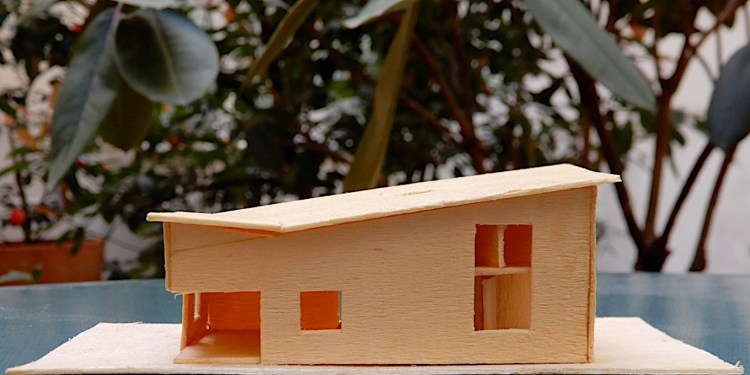
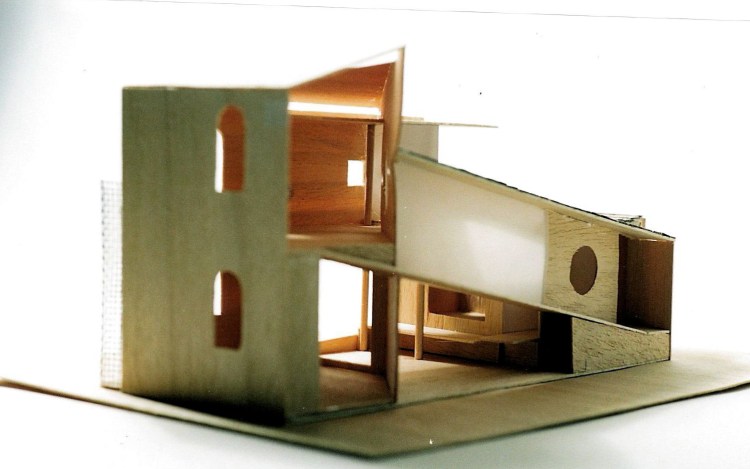
TOWNHOUSE, SYDNEY, 1999
For a cousin whose husband owned the existing chaotic over-developed property. Sketch model of scheme to partially demolish and rebuild, with patio (for weekday parking and outdoor leisure activities) and connecting ramp.

50 r. VOLANT, NANTERRE, 1992
Block model in solid oak to illustrate to the client the articulation of volumes disengaged by the project by selective elimination and clarification of those already existing.
Coll. : CMAS, Paris.
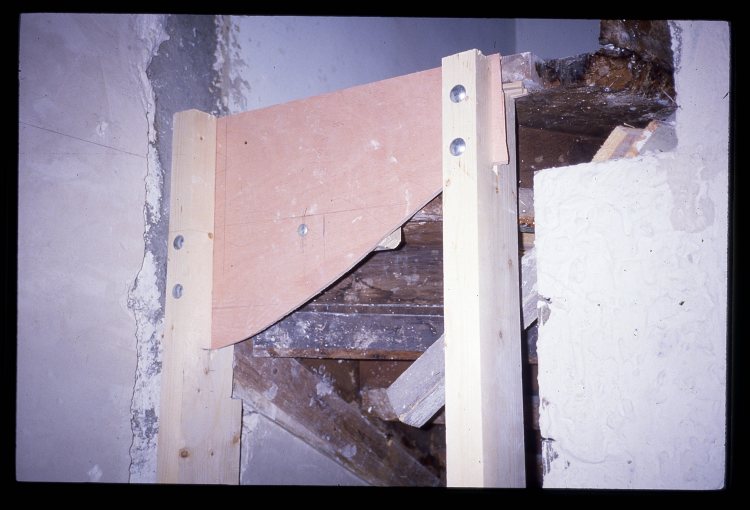
PLY BEAM, PARIS, 1987
A contractor, due to complete the wall to the right the following week, had excessively priced this structural solution, suggested by François BELLET.
I decided to full-scale model it myself, over the weekend. It stayed in place.
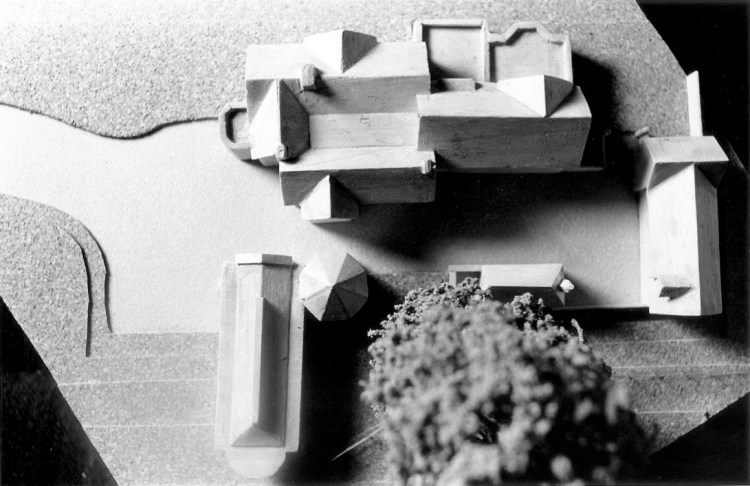
DONNINGTON HOLT BATH HOUSES, 1985
Block model, using a stucco infill technique learnt from Gianni BRAGHIERI, to illustrate to the client the relevance of the proposal.
Coll. : CMAS, Paris.
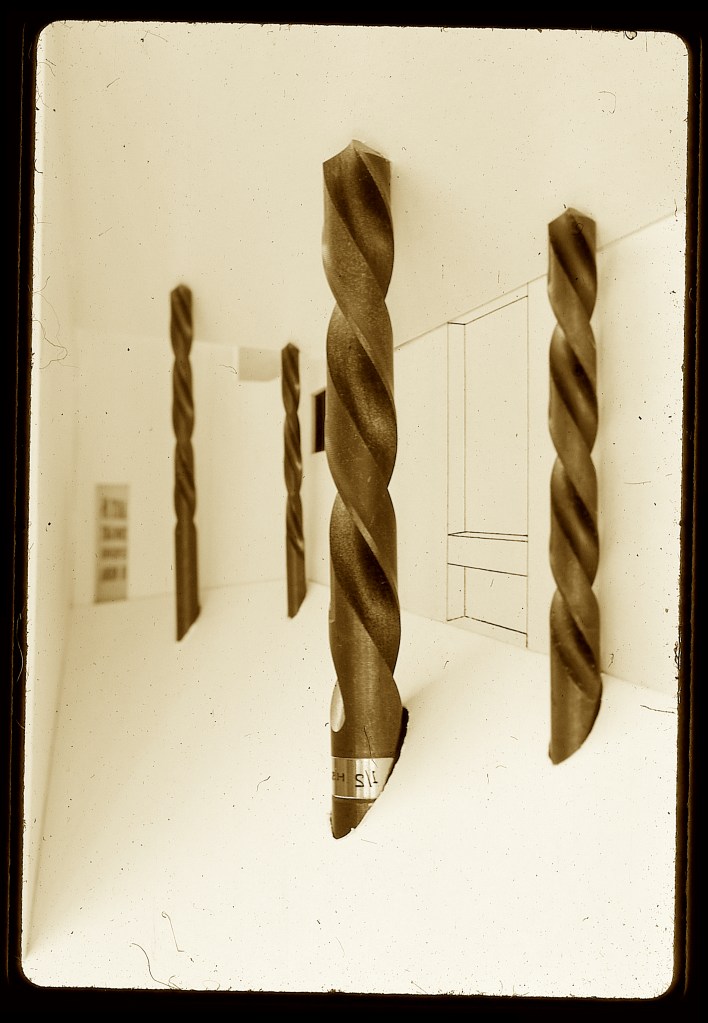
ASYLUM PROJECT, 1978
Besides the use of readymade items, this model (destroyed) also explored the device of trompe l’oeil perspective that the likes of Donato BRAMANTE (aged 27) had employed in his apse for Santa Maria presso San Satiro in Milan back in 1471.
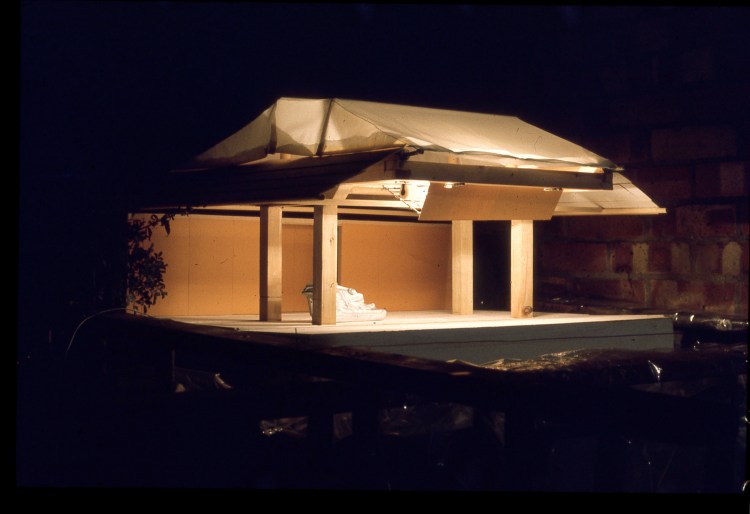
FLOATING STAGE, THE SERPENTINE, 1977
Genuinely (momentarily…) floating model of plaster-covered polystyrene with timber & card superstructure. Revelatory of the loading issues involved !
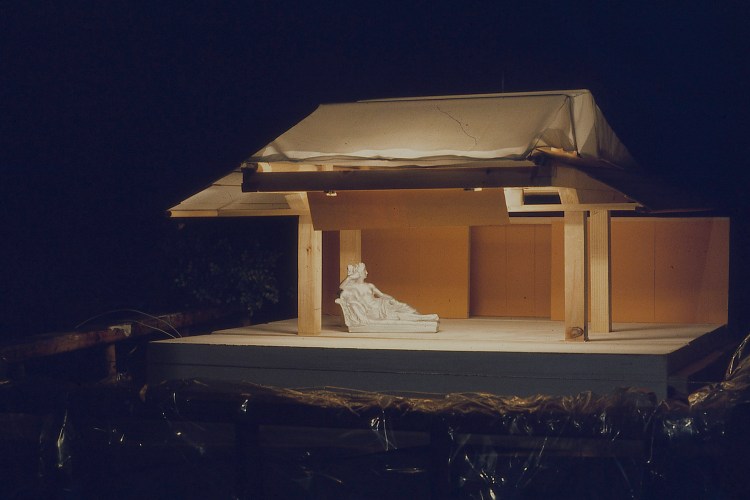
1st year School of Achitecture project for an open-air theatre in Kensington Gardens. Isolating the stage on the water would improve acoustics, leave more lawn for the public and contain the sprawl of technical paraphernalia which typically spoils such temporary erections.
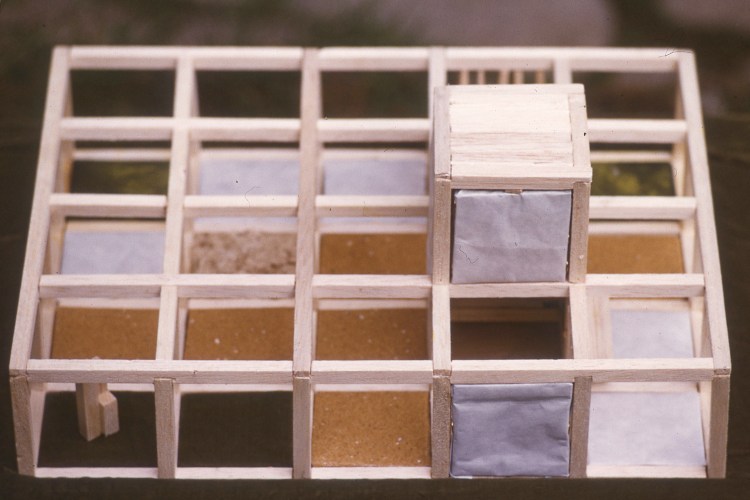
DESIGN FOR A FOLLY, 1974
Balsa wood model using materials either mottled (marbled paper) or textured (velvet, sandpaper, plaster). Destroyed.
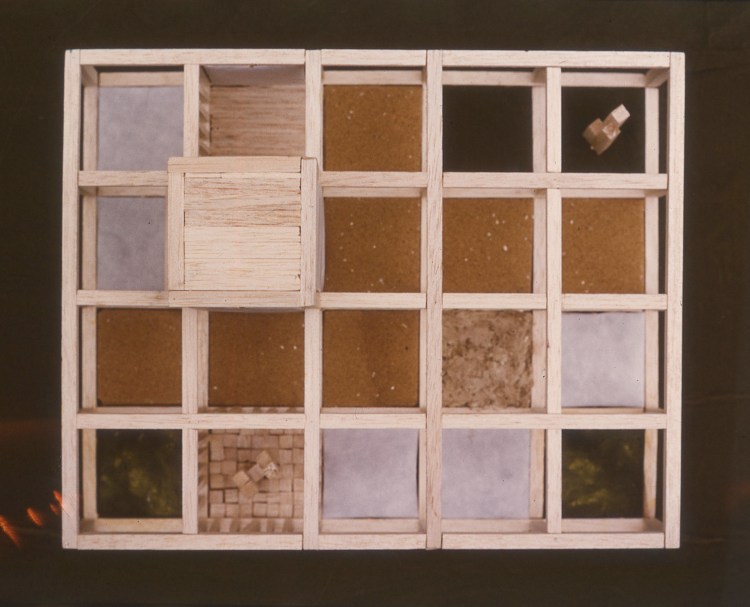
In preparation for a career in Architecture, Michael WOODS persuaded those that needed to be that I should opt for an A-level in Art. This was summer holiday task he set three of us to pursue. I already knew Egon EIERMANN’s work, but not Werner DÜTTMANN. Today I still adhere to their aesthetic.
Others’ models to our designs
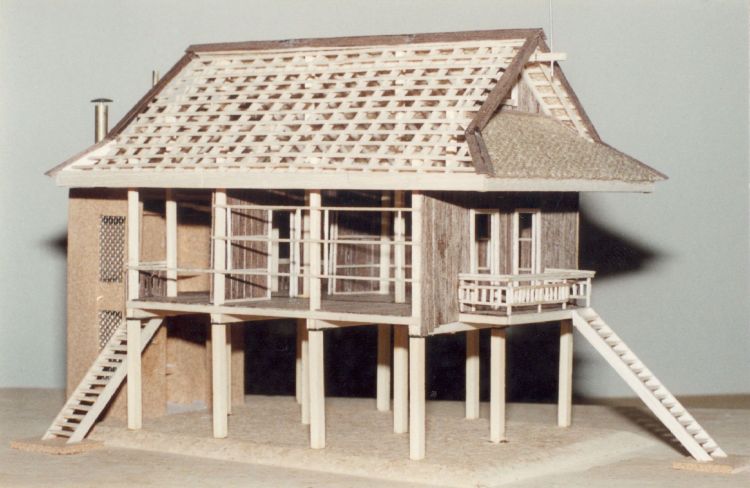
KIT HOUSES FOR CAMBODIA, 1995
Balsa ; cork ; wood veneer ; hemp webbing.
By Jonathan BARNABY, to design of CMAS & Mimmo LERRO, for R.Ev. (French association that I founded).

ACROPOLIS MUSEUM, KOILE, 1990
Balsa ; cork.
By XX on behalf of architects Louise COTTER, David NAESSENS & Christopher STEAD.
Photo of model taken on the very site (Koile) after the exhibition.
 opus incertum