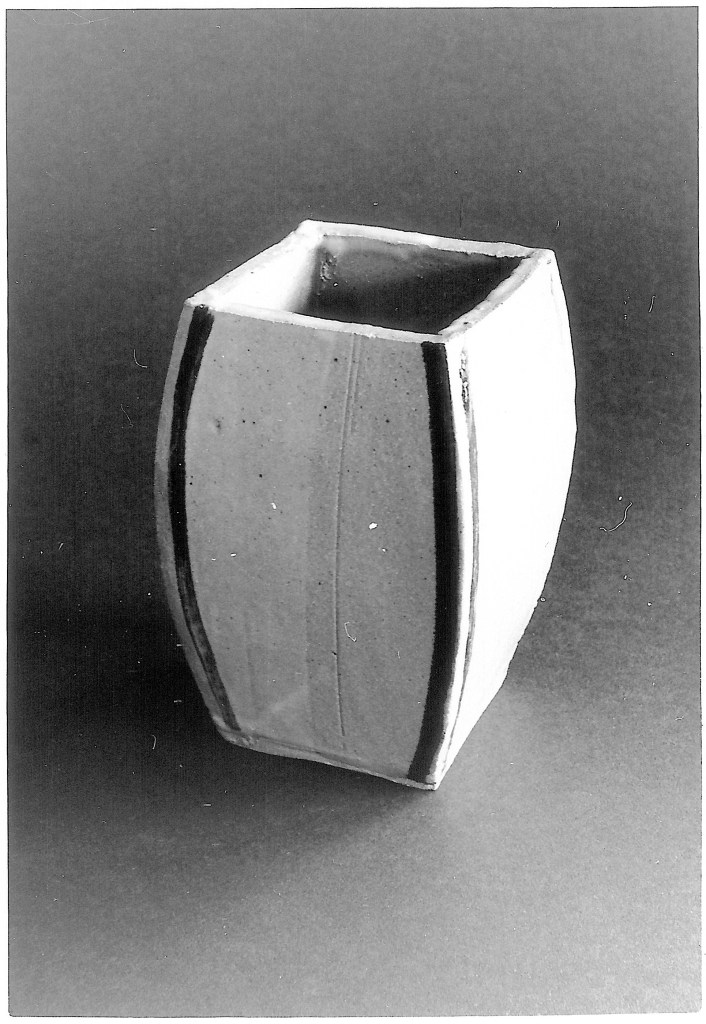
Slab-ware is a pottery technique consisting of the assemblage of slabs of clay cut to a certain thickness (usually uniform, to avoid uneven drying which may provoke cracking). The cutting of uniform thicknesses was achieved with tense “cheese-wires”, suspended at a given height above the work plane and drawn through a pile of well-kneaded clay. The effort and skill required can be considerable, due to the resistance and floppiness of the clay.
If the cheese-wire has kinks or knots in it, these defects will appear on the surface. Analogous to the spiral ribbing of fingers during the throwing of pots on a wheel, it seemed superfluous, if not undesirable, to attempt to rectify such blemishes, which might even enhance the aesthetic I was exploring.
Likewise contemporary black-and-white pictures (shot, developed and printed by myself in 1973) reveal the perfectible limits of what a 14-15 year old could achieve under the dust-laden circumstances.
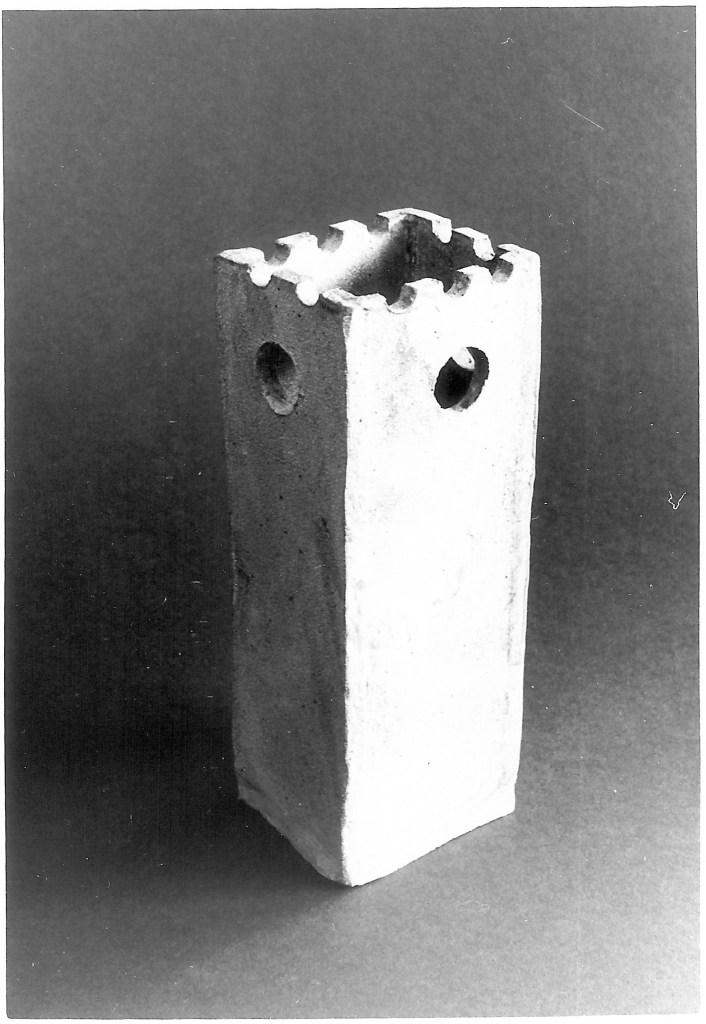
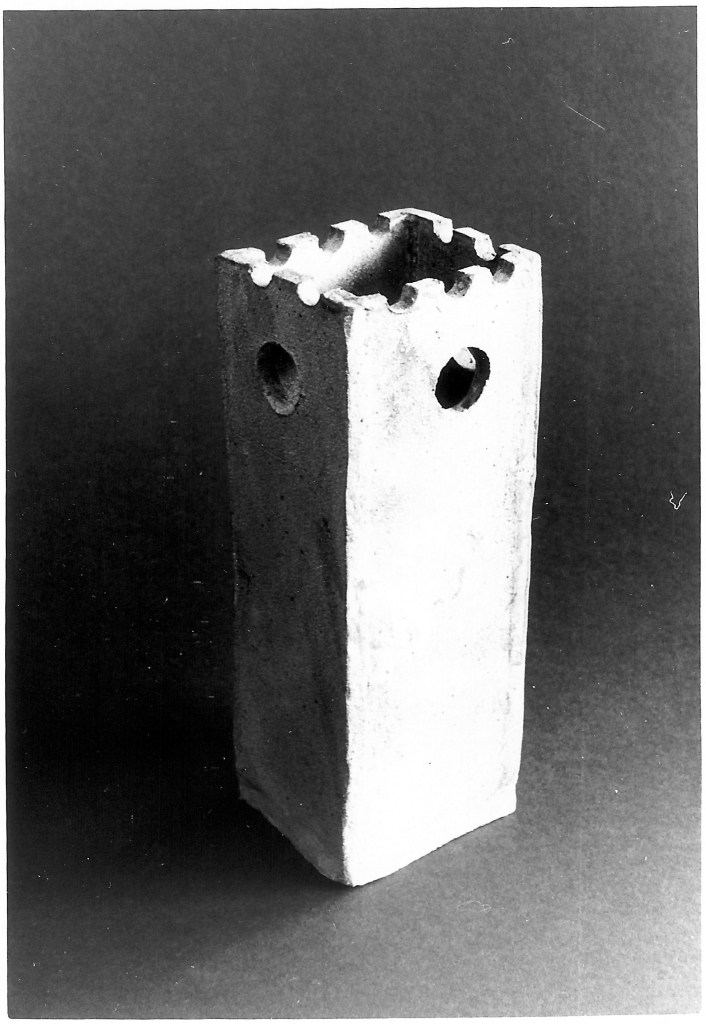
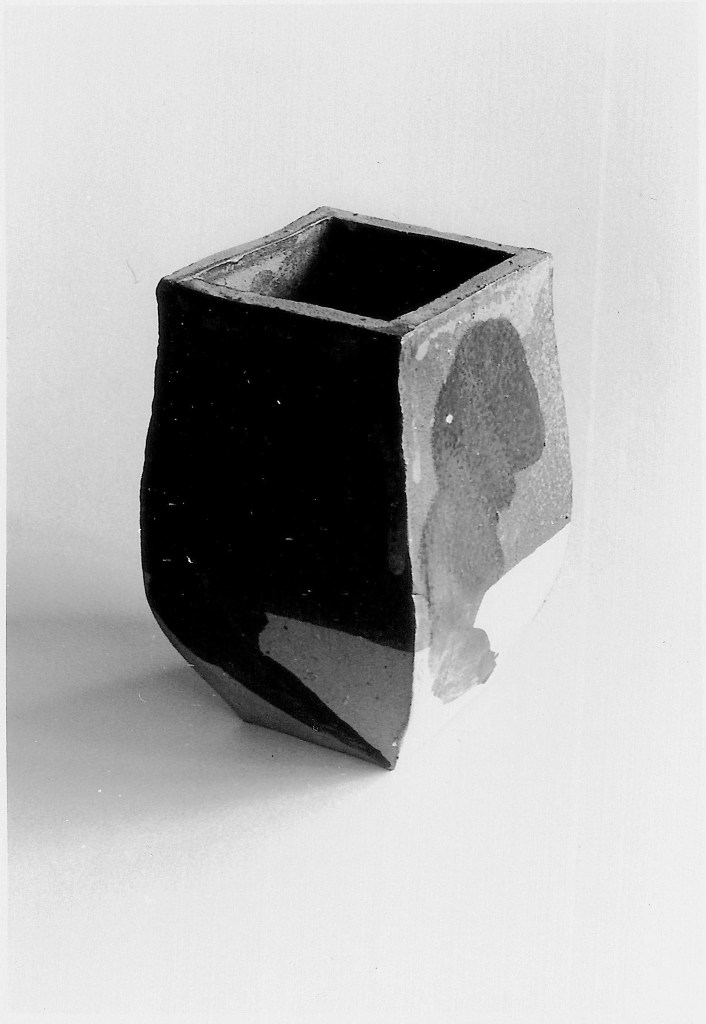
Pierced & crenelated ash-glaze vase, 1973
Although all four side walls were cut to identical size, and pierced in the same position, the plan could not be square, should the circular piercings correspond. Inasmuch as the (double) thickness of slab walls determines the oblong plan, the crenelation atop visually compensates the inequivalent ‘façades’. Incidentally, much of the delight to be observed in built Architecture is precisely due to the deft play of such compositional tricks. At least that is what one discovers when designing buildings.
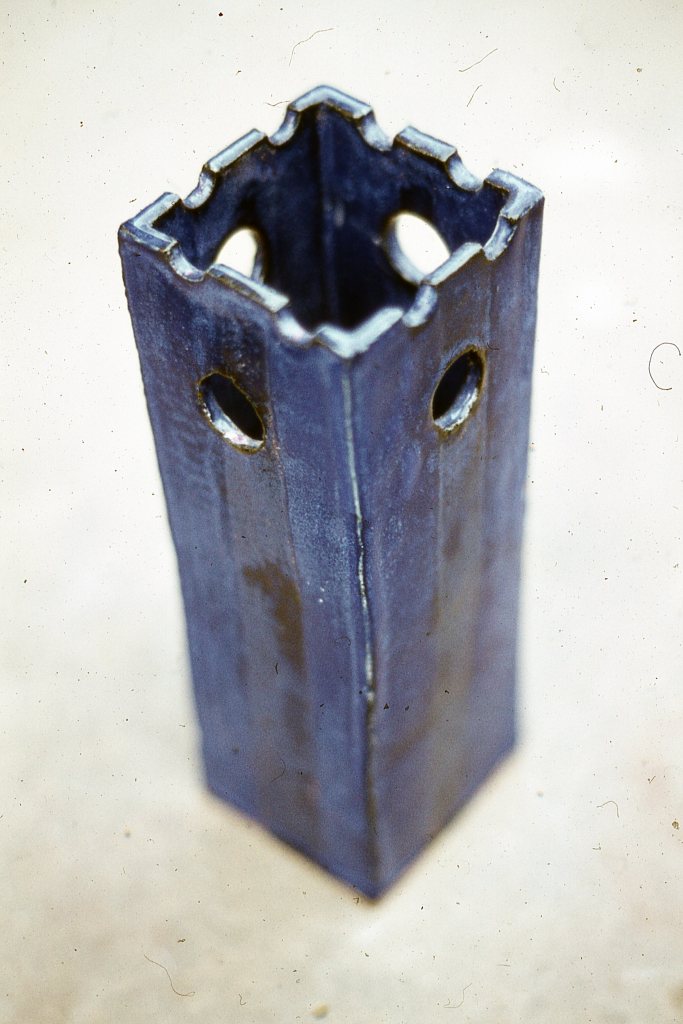
Pierced & crenelated blue glaze vase, 1973
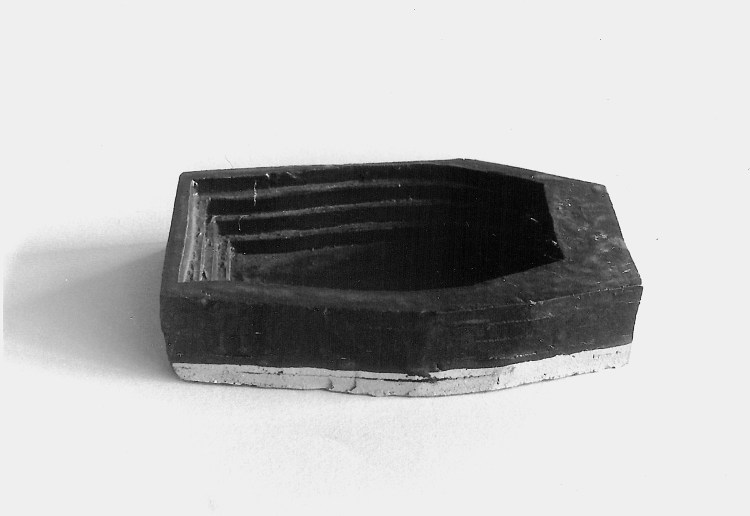
Tiered stoneware dish, 1973
Move down
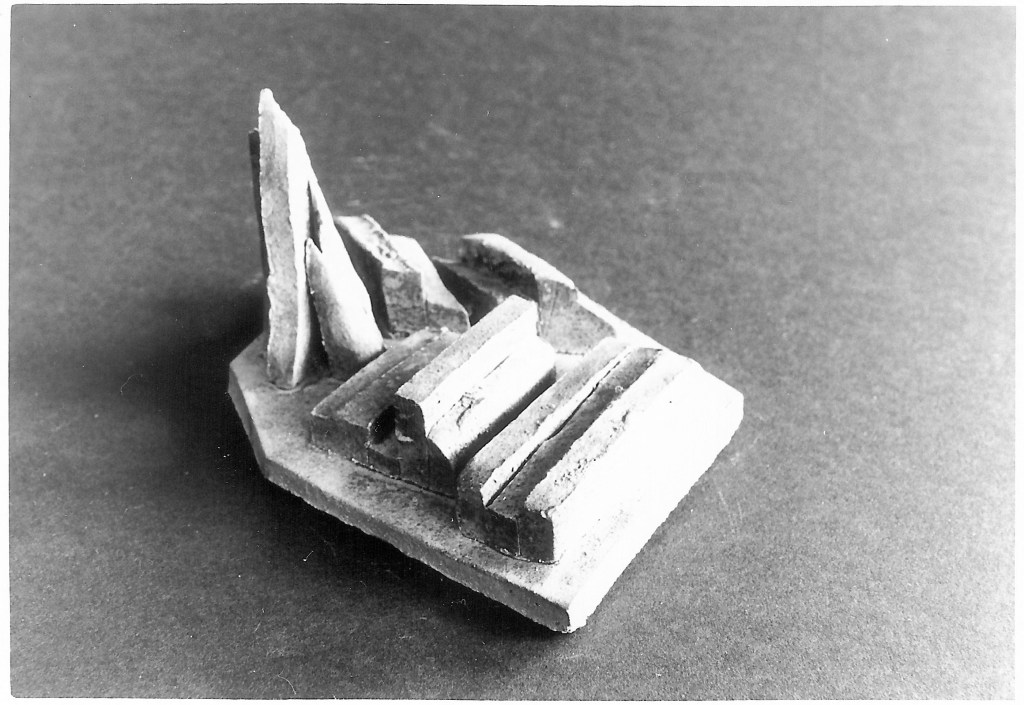
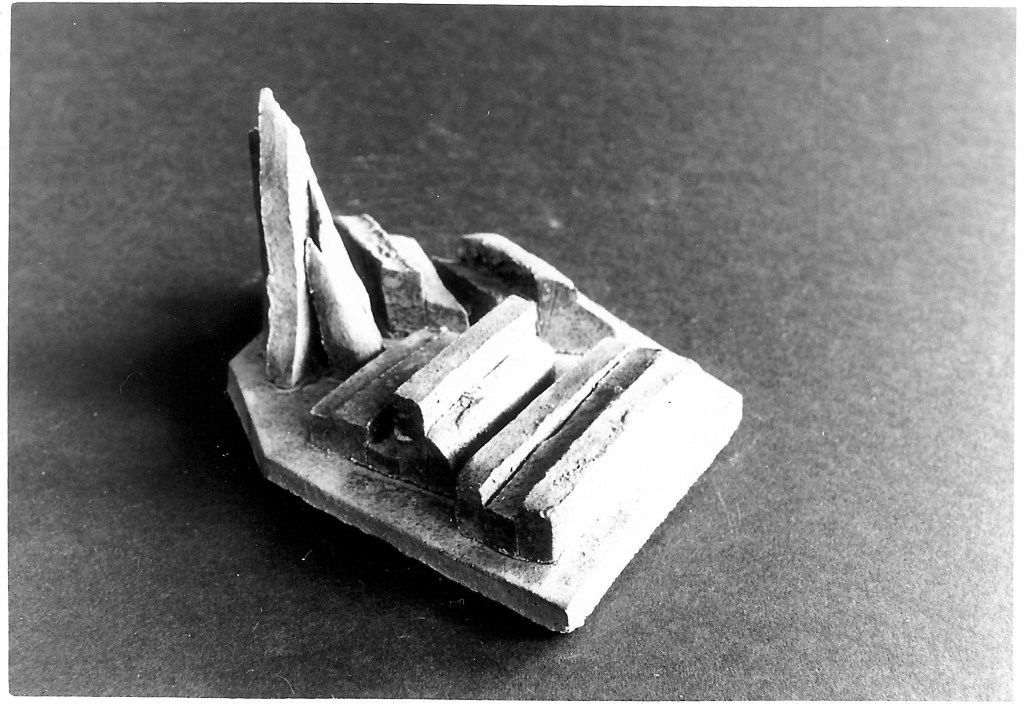
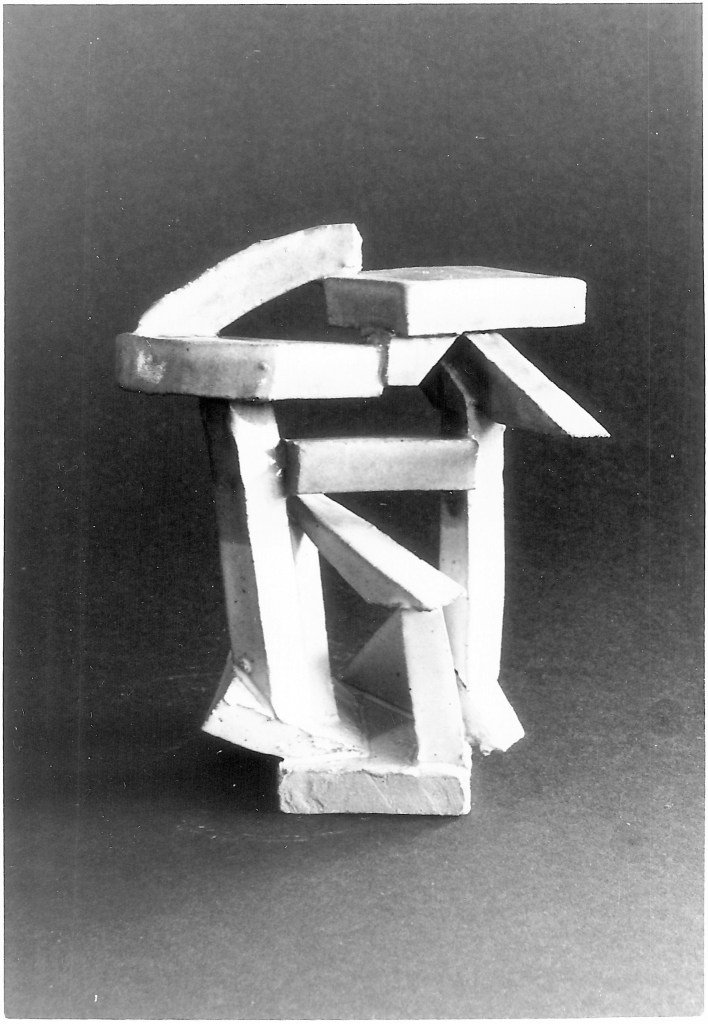
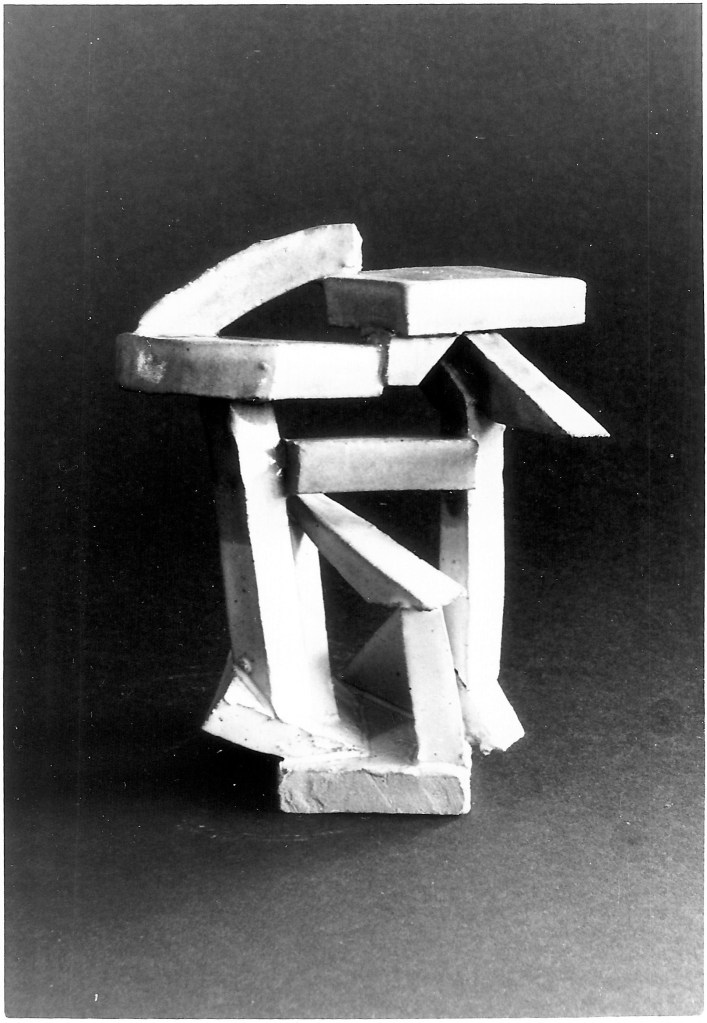
Architectural piece, 1973
A small stoneware sculpture of slab trimmings, welded by clay slip, finished with an ash-based glaze. Looking at it now, I recognise the influence of German Architecture on my adolescent mind. (In 1972 my sister and I had visited Munich and Austria as guests of the SCHÜSTER family, whose children had also stayed with us in Scotland.)
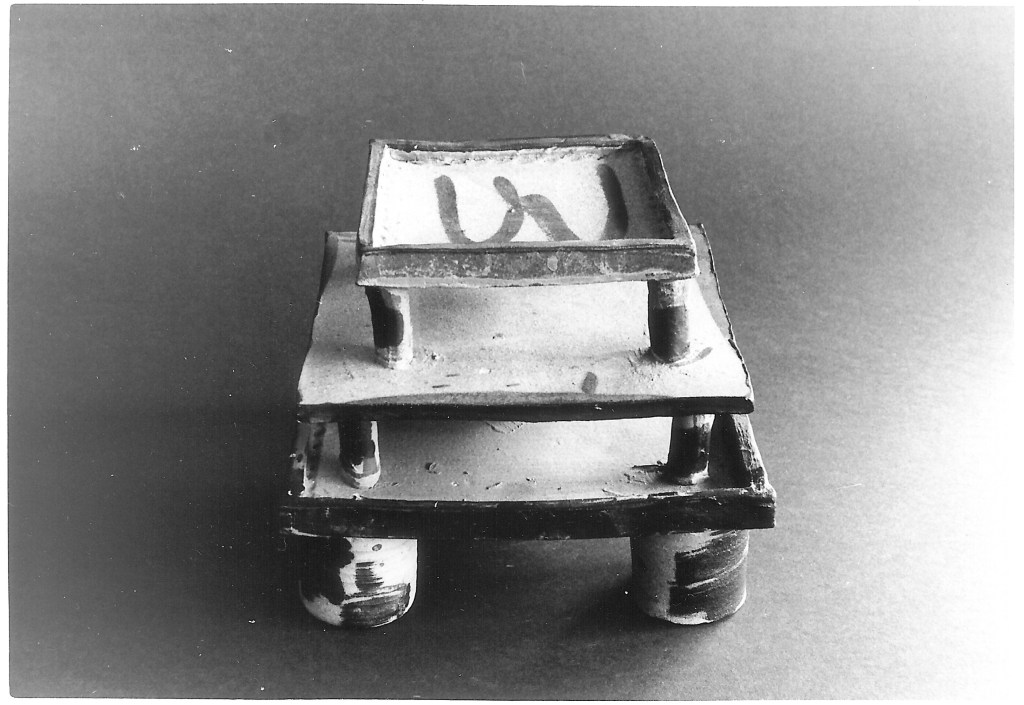
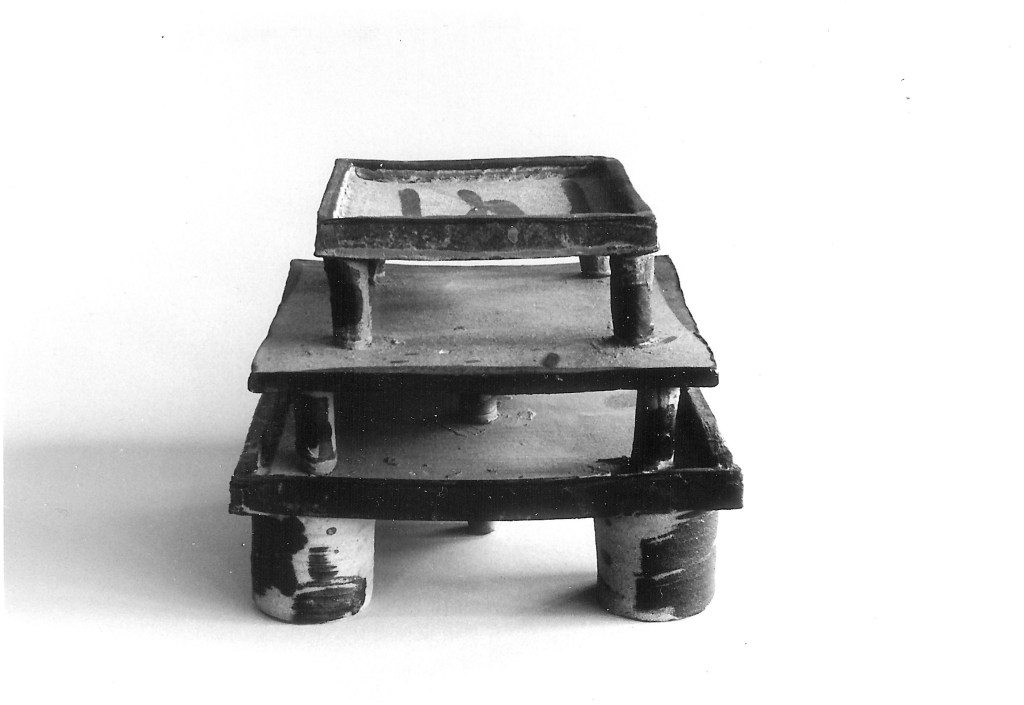
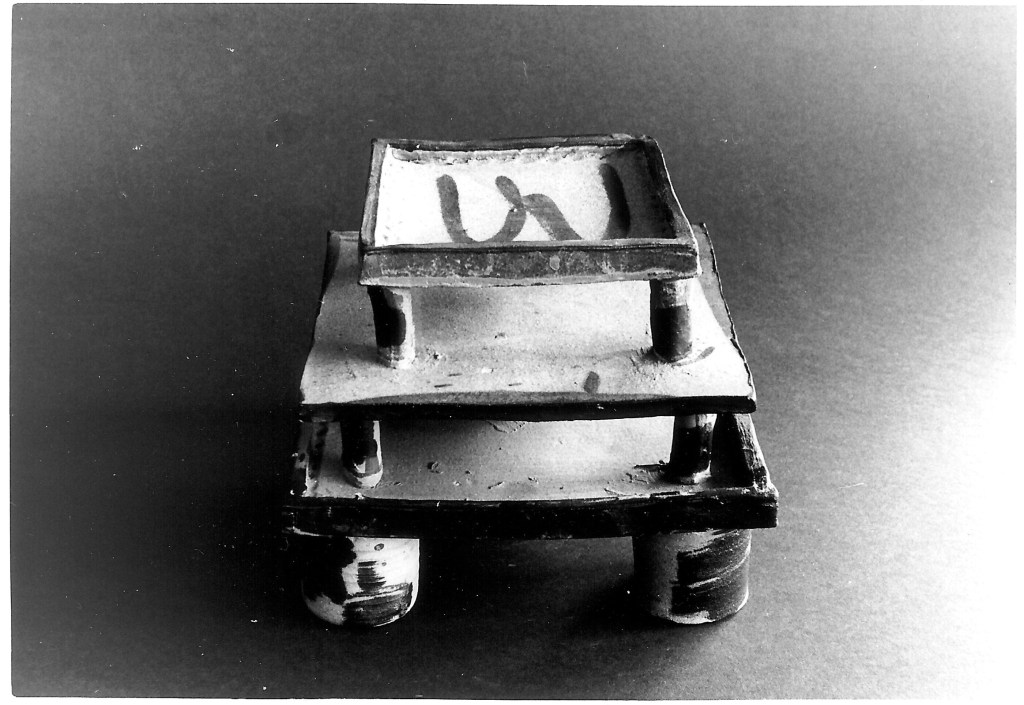
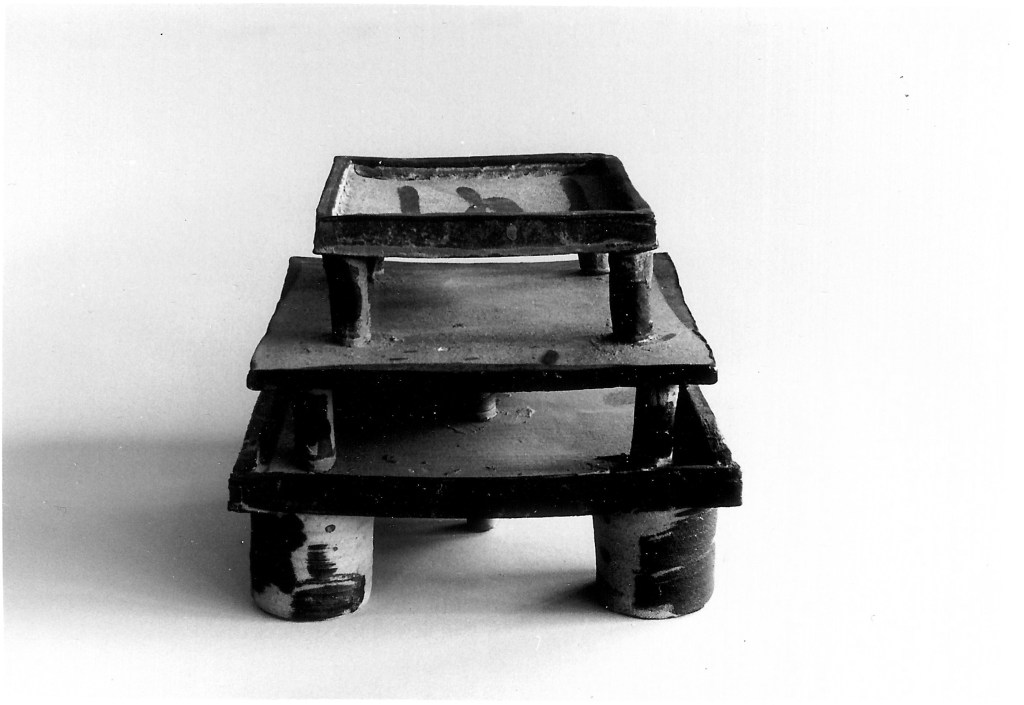
Tiered construction, 1973
A hybrid construction of slabs, rolled and thrown elements (lower hollow corner columns) this stoneware item has an ash-based glazed with manganese daubing.
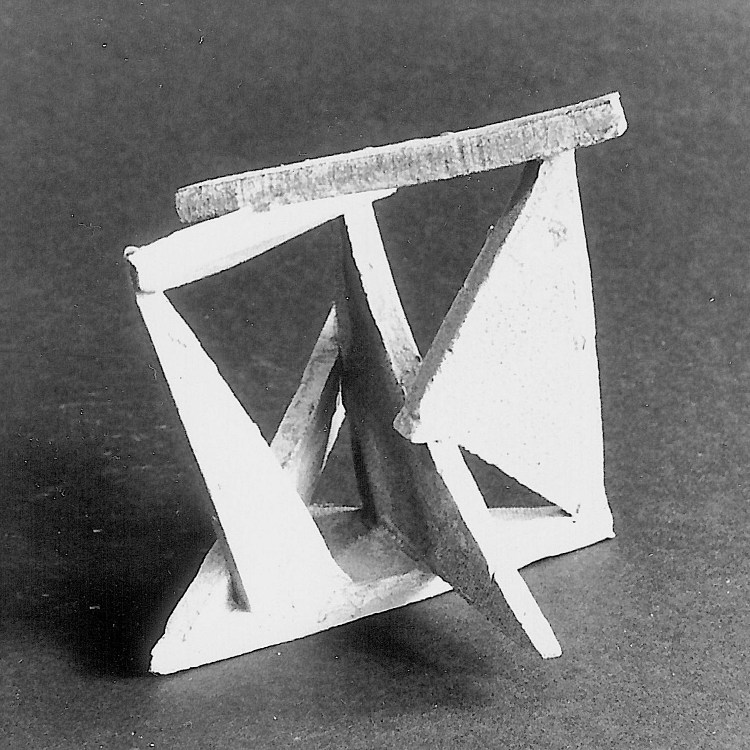
Abstract configuration, 1973
As soon as an abstract figure such as a triangle is repeated, the very configuration is sufficient to suggest a composition of figurative elements. One of the great discoveries of early 20th C. artists, keen to rid themselves of overly descriptive detail, in order to convey abstract notions such as ‘movement’. In hindsight I’m astonished that the bearer elements extend beyond the platform on each side. Mottled white stoneware glaze.
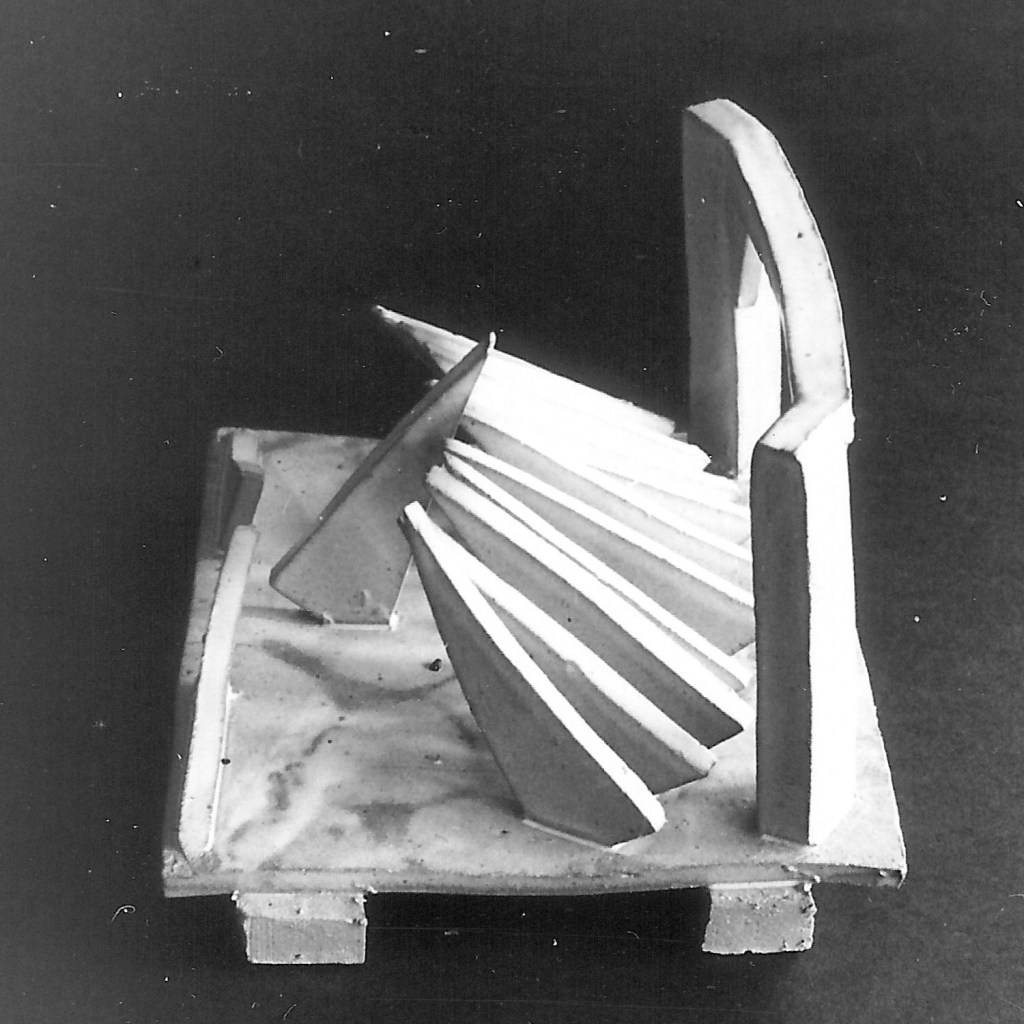
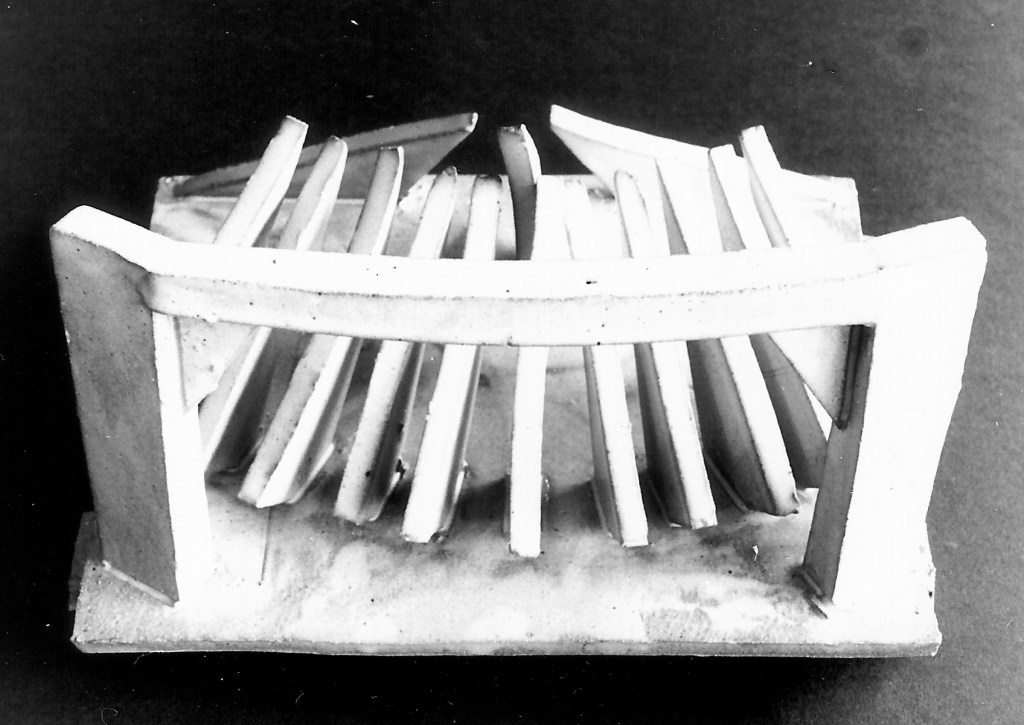
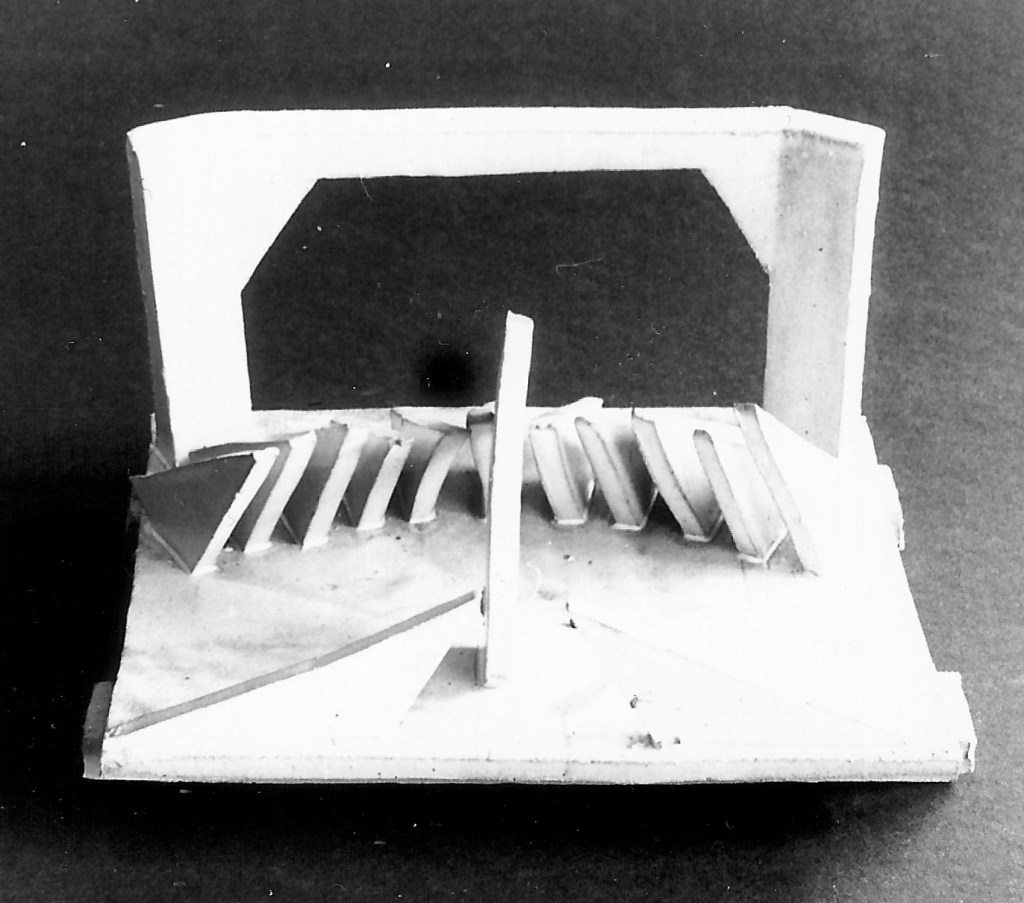
Ash-glazed stoneware.
Related pages / pages apparentées / pagine apparentate :
Slab-ware pottery / Céramique à dalles / Ceramica a lastre
Art, crafts & DIY / Art, artisanat et système D / Arte, artigianato e fai-da-te
Architecture & planning / Architecture et urbanisme / Architettura e urbanistica
Design & bespoke furnishings / Design et mobilier spécifique / Design e arredo specifico
OPUS INCERTUM : Take Your Pick / Faites Votre Choix / Scegliete Voi
Interventions by Date (reverse chronology)
 opus incertum