The term conversion refers, in architectural practice, to operations which modify the original or most recent purpose for which an existing building was devised. Change of use usually require planning permission. Here are presented some such conversion projects, built or not.
Most have their own page for further detail.
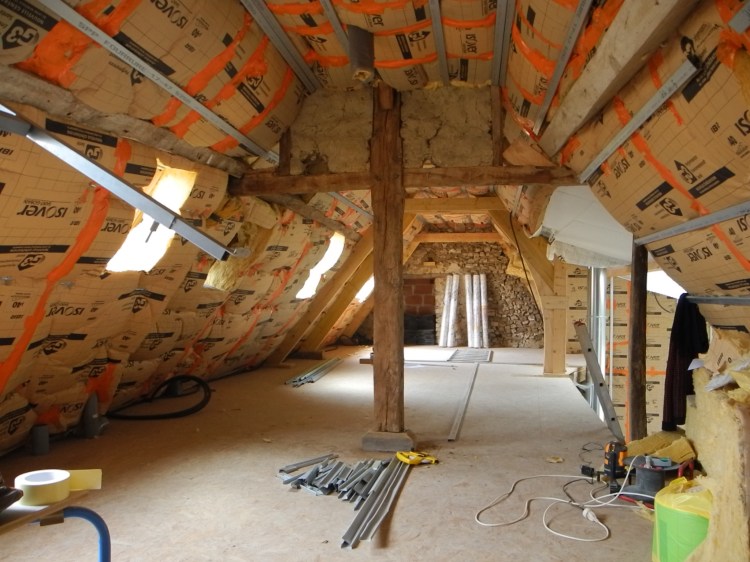
Roofspace conversion, France, 2015
The steep pitch of slated roofs in the north west regions of France, formerly perhaps used as pigeonniers, with torchis partitions, and direct access by ladder from the outside, tempt their owners to render them fit for human habitation. Here the access was provided by adding a voluminous extention, serving also as stairwell.
Barn conversion, Périgord, France, 2009
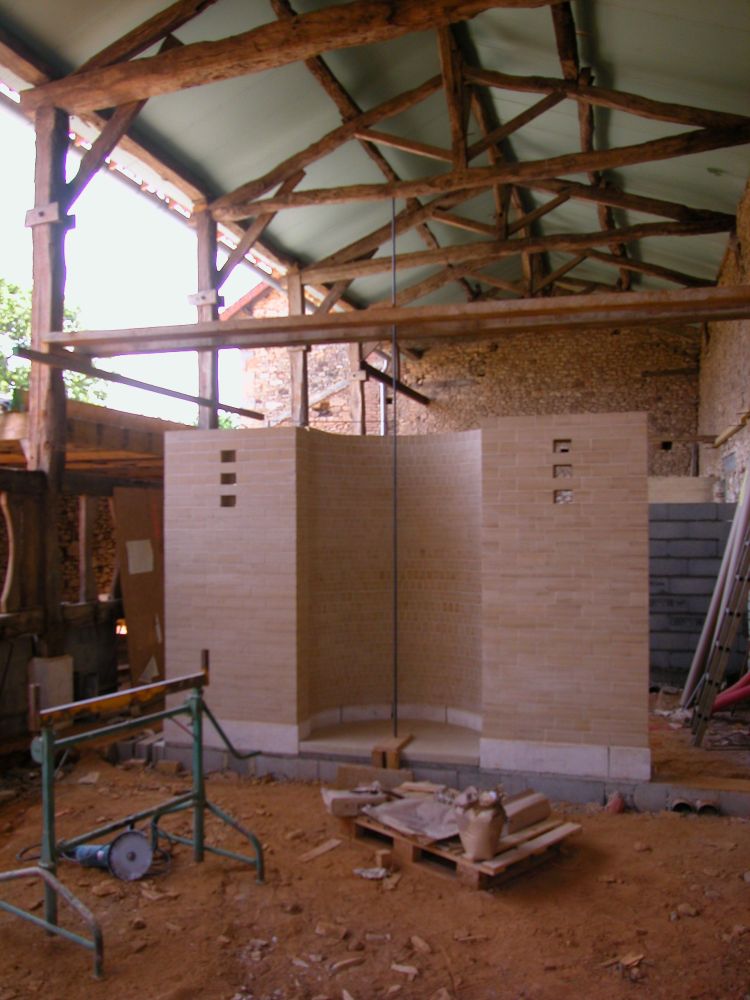
The clients had purchased land with agricultural buildings which had not served for decades. The existing house, badly modified since WWII, had structural problems and would absorb cash for very little return. I proposed using the barn where 2 storeys could be accommodated, with terraces and patios.
Given the clients’ desire to live with the natural stone walls, and as much of the original charpente as could be kept, I proposed structural & partition masonry in stabilised raw brick (manufactured 25km from the site, but discovered in a Paris trade fair) and a light-weight façade in béton de chanvre in which the timber posts could be incorporated.
Client / contractor collusion unfortunately obliged me to withdraw before I could enjoy the result.
Les Amis de Magnum, Paris, 2006
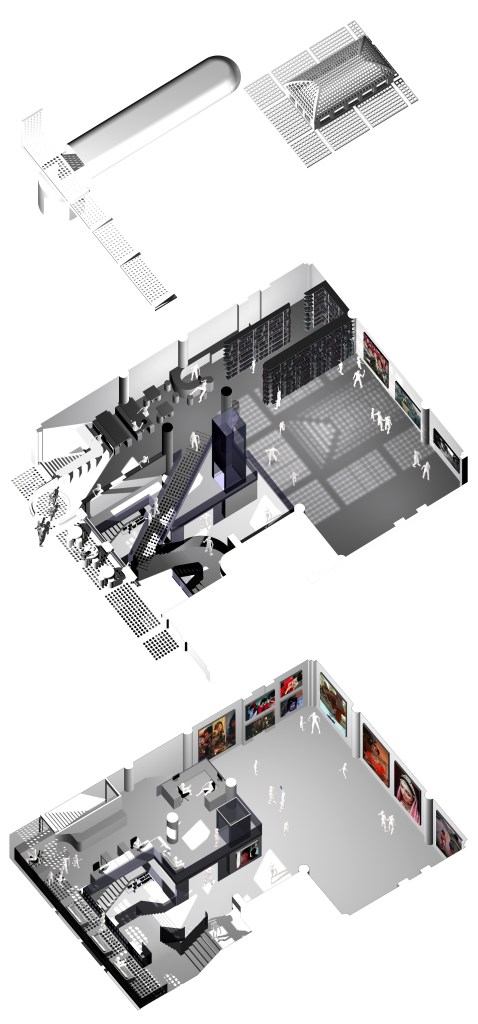
In 2001 I had surveyed the former dance hall premises belonging to an architect colleague, who was looking to sell them, potentially already with planning permission. However, exit requirements are not identical, depending on projected use. Michael RUSSUM, who saw me exploring the possibilities in our shared London offices, told me I was ‘wasting my time’.
Five years later he & his partners would be working with me on a private competition scheme, sponsored by VINCI, for Les Amis de Magnum, who desired to acquire the very same premises for photographic exhibitions. WILLMOTTE, LACATON & VASSAL and a few other star practices had already been invited. Emmanuel ABOULKER, the seller, put forward my name, and so BPR Architects and myself developed a scheme, initially by fax.
Halfway through, François PINAULT launched a hostile bid for a controlling stake in VINCI, a direct consequence of which was that we found ourselves competing not just against a few chosen stars, but a bunch more start-up practices.
Since I had made a complete survey of the underground premises, and of parts of the adjacent building, BPR was able to render up and develop a walk-through video that Michael RUSSUM presented in person in Paris.
Mansard conversions, Paris, 2006
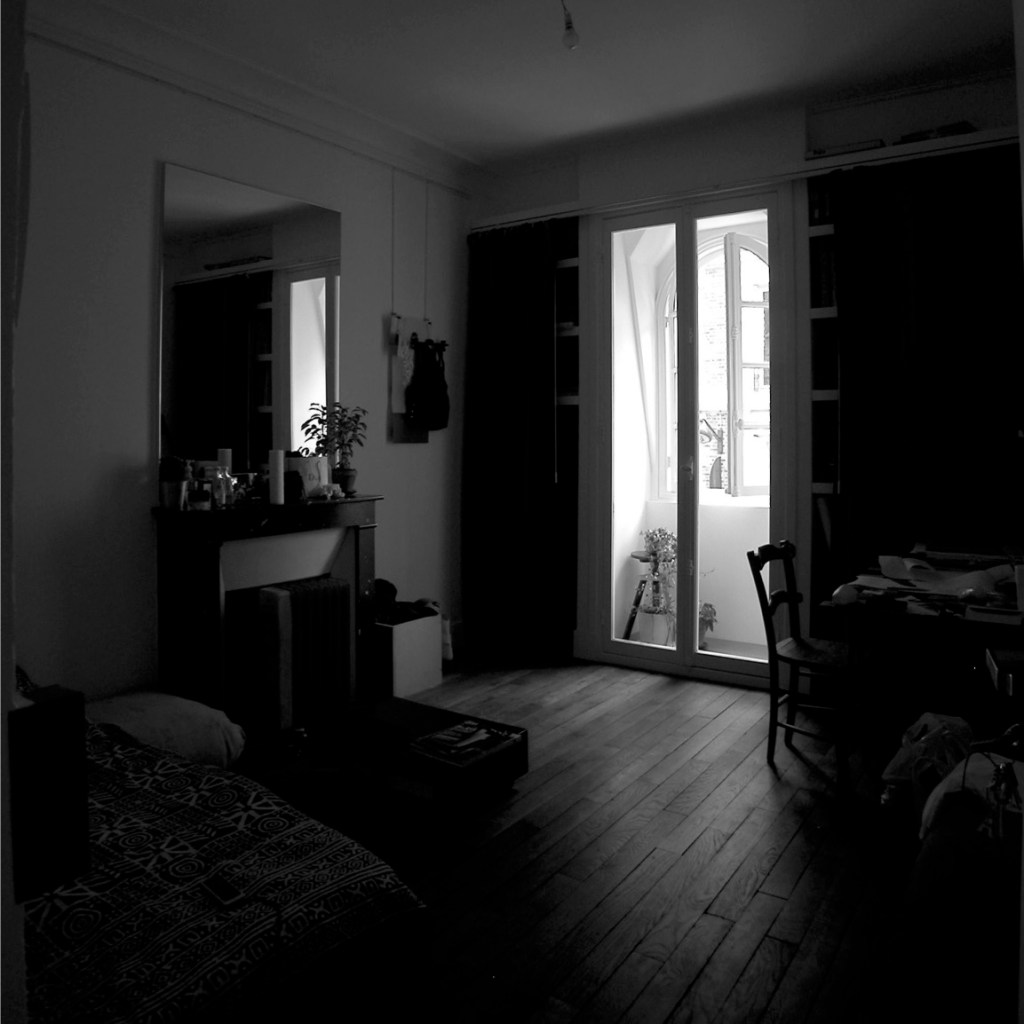
This project concerns the second-floor conversion of mansarded office space, no longer used, into residential rental accommodation, for the Lutheran Church. Formerly pastoral offices & parish meeting rooms, they were barely habitable. Acoustic linings, thermal insulation, provision of down-pipes and lining the church’s flue constitue the invisible bulk of procurement. Clothes storage exploit the sloping brisis, flanking French-windowed plant lobbies, which obviate the need to replace original window joinery. Given the low budget I ended up fitting joinery (shelves, skirting, mirror etc.) in the studio flat myself.
Brethren church in Grasse, France, 1999
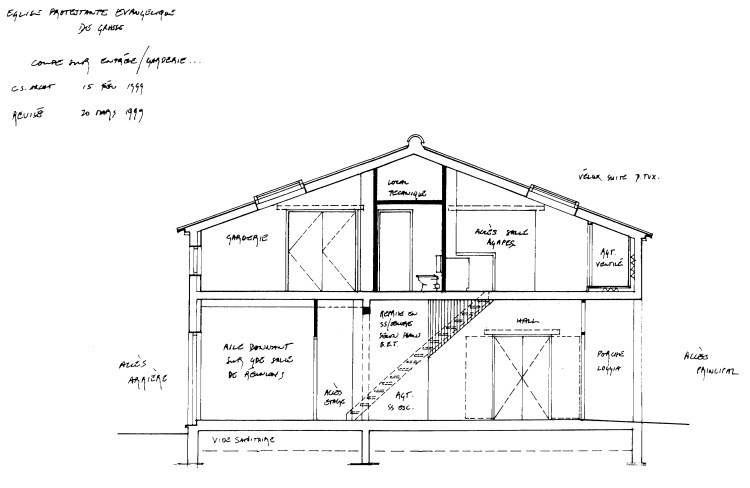
Two adjoining former commercial premises were amalgamated to form the meeting rooms of the local église de frères I briefly joined when living in Nice. A simple manoeuvre, inverting the direction of the staircase, made for a viable, economic and immediately do-able solution.
Farm buildings, Nanterre, France, 1994
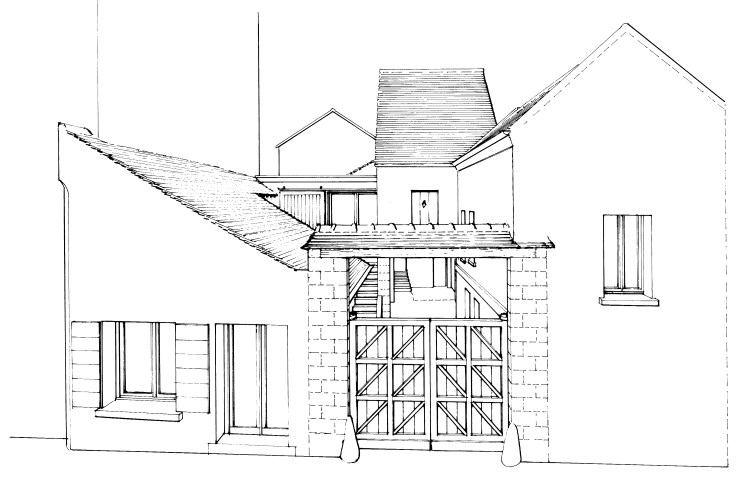
A house, right, flanked a long narrow strip of land which ended up in a small garden. The client’s offices, left, gave onto the street. Wishing to rent empty first-floor premises as flats, access was the issue. From the office roof there was a great view, enjoyed by none. A cosy terrace there now gives access to the flats.
Related or parent pages :
Architectural Studies (co-signatory)
Interventions By Date (reverse chronology)
Take Your Pick (thematic groupings)
 opus incertum