Living in a constricted space is a real issue for many people, including close friends in Paris, amongst whom I include the extended Roma gypsy family (5 generations) that I have come to know since 2013, and countless single urban dwellers. Helping any of them move abode, and store their stuff, can be a challenge. Nomads however survive by jettisoning their material trappings.
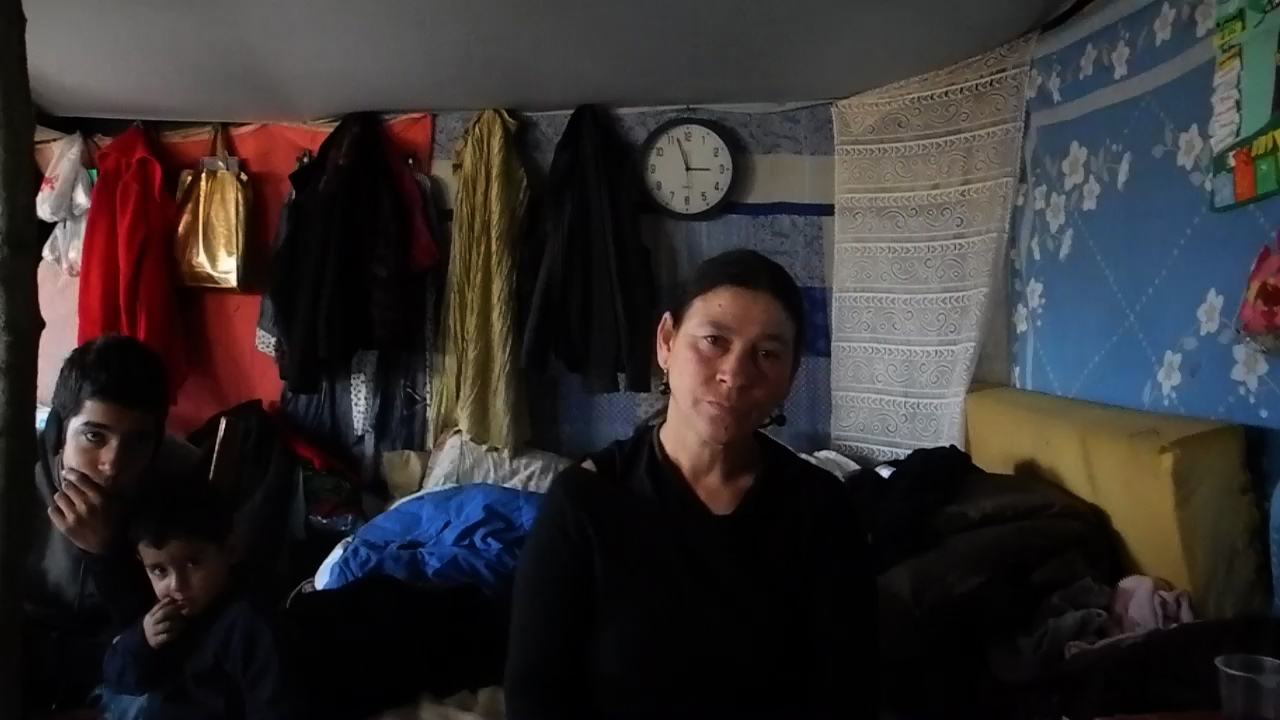
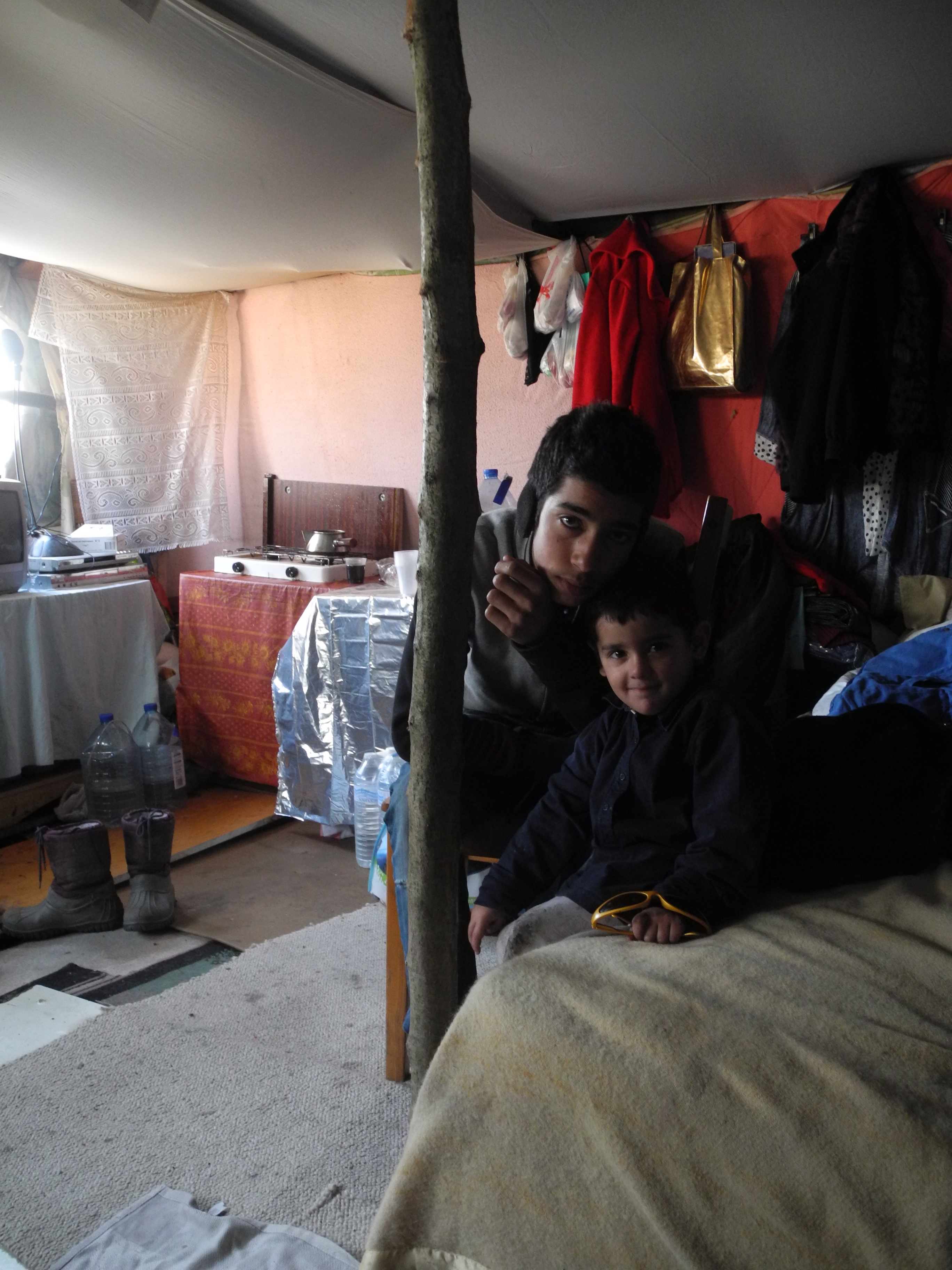
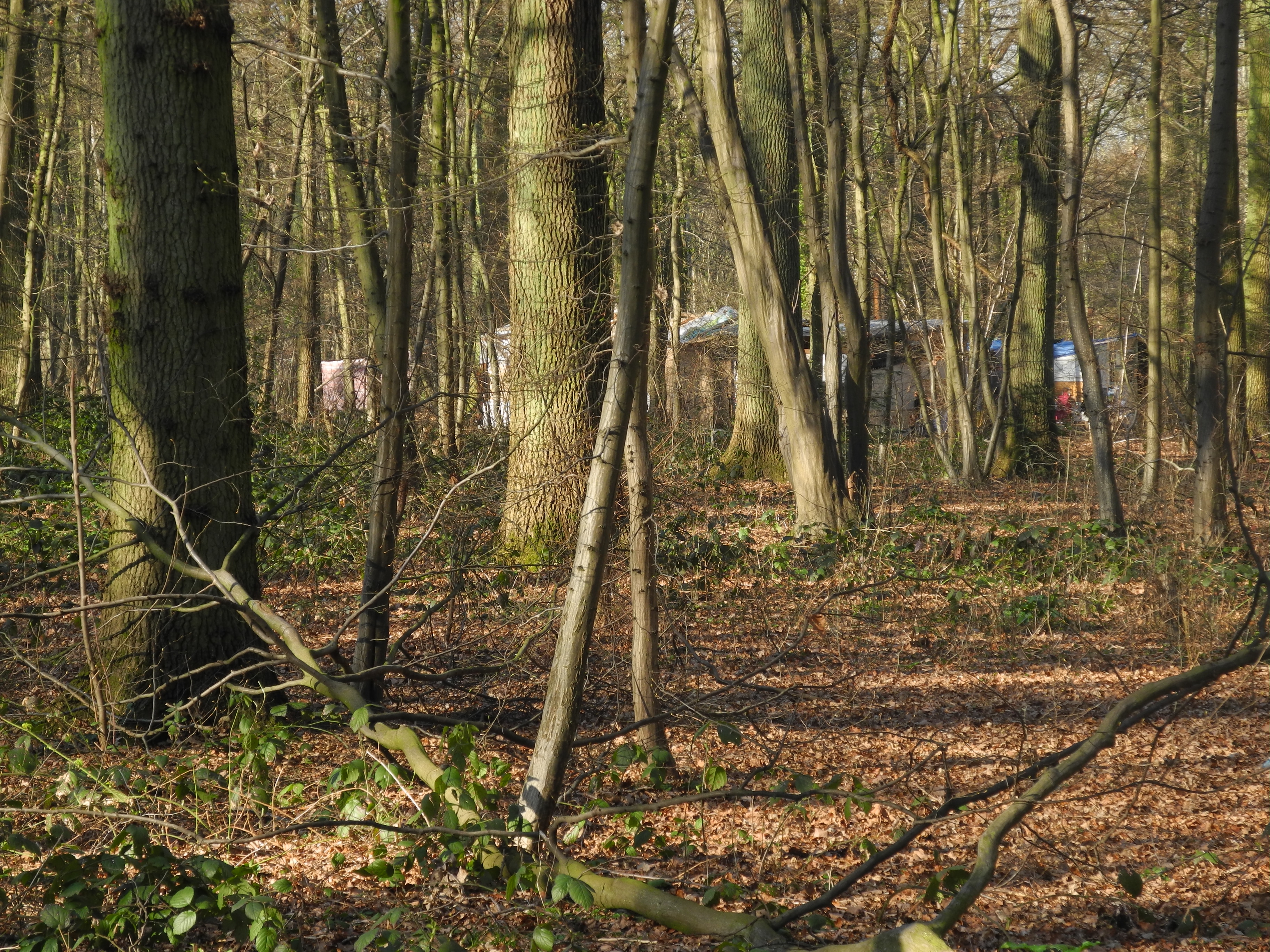
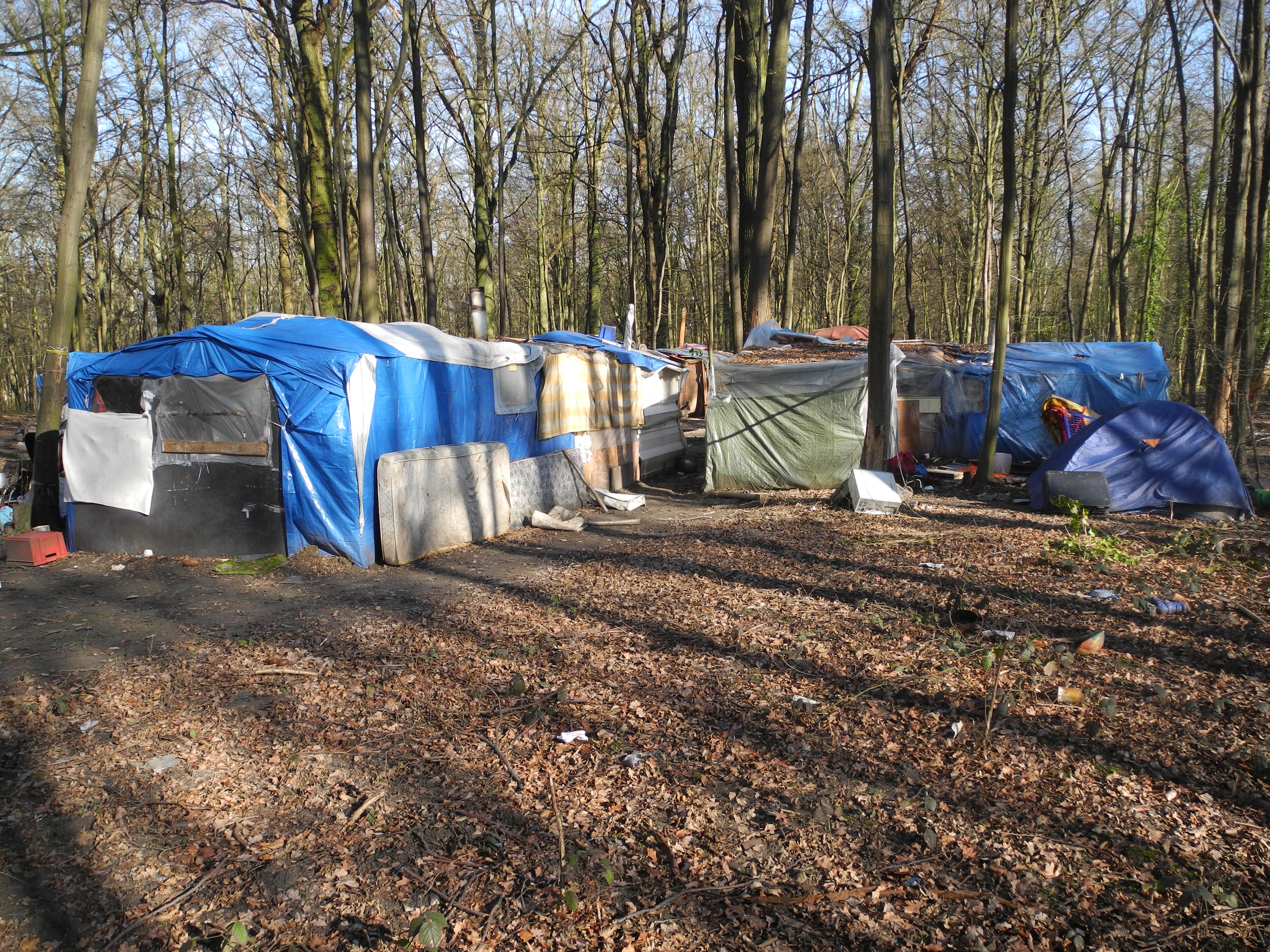
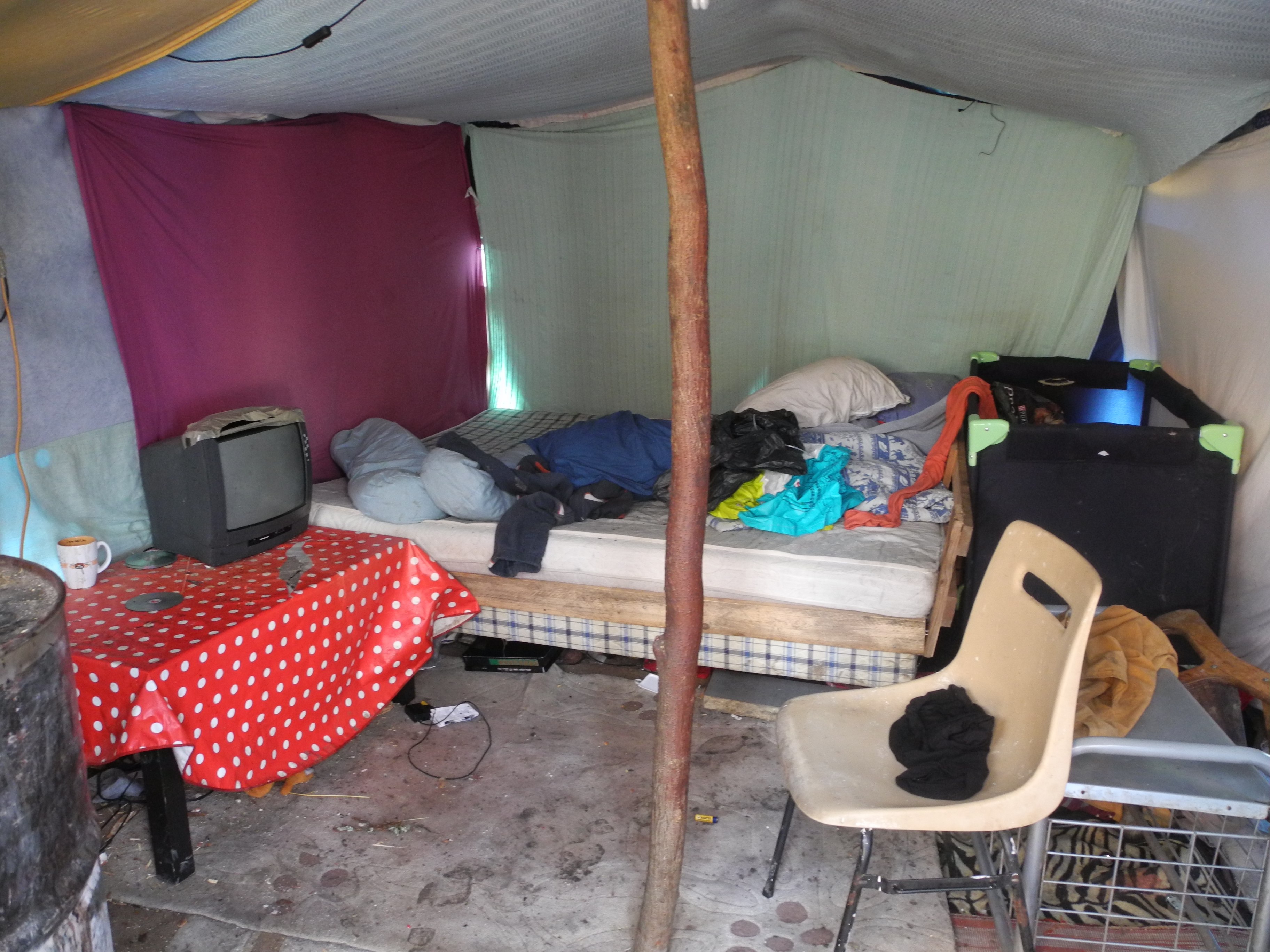
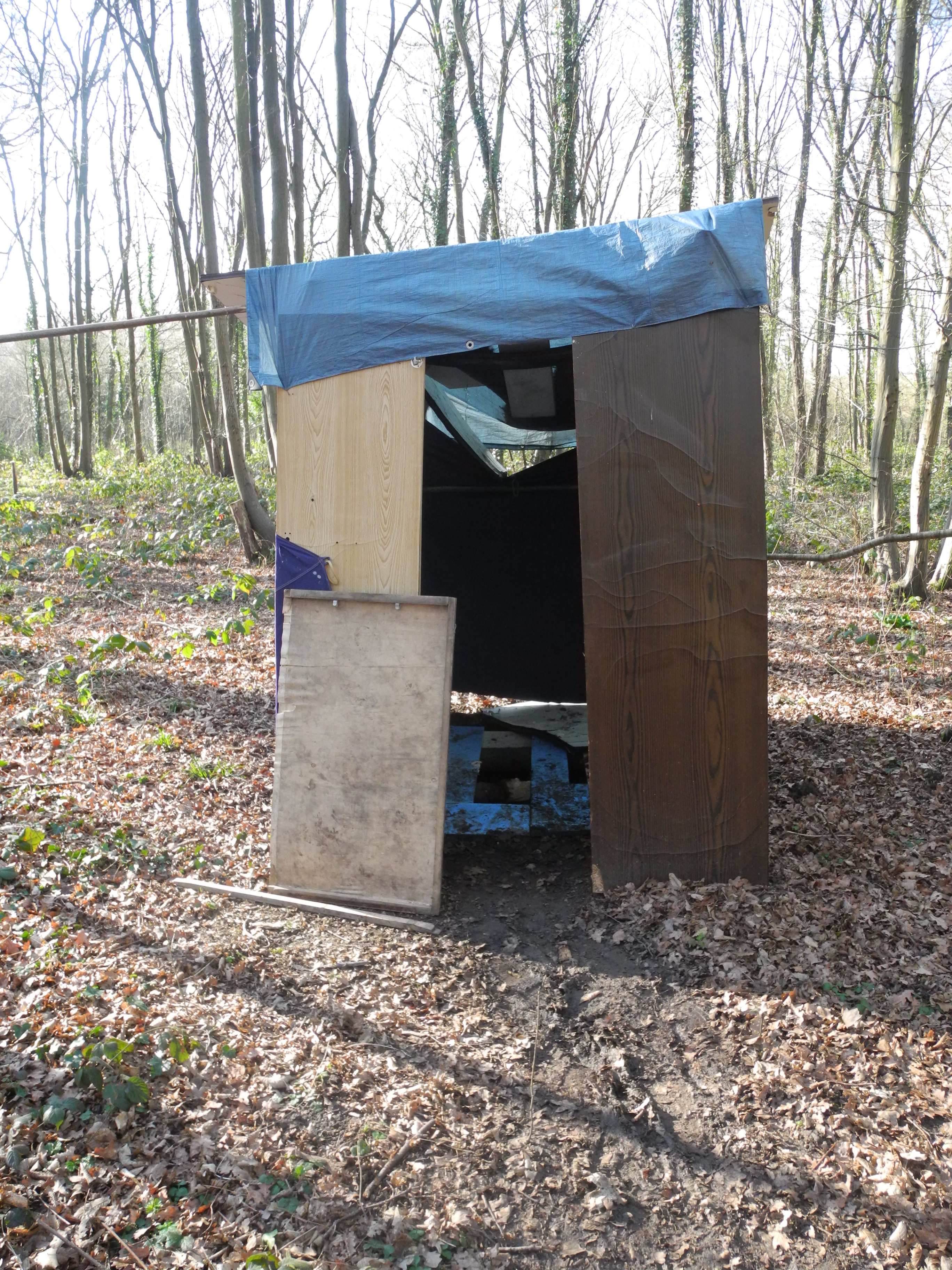
Roma camps in Noisiel, 2013 & 2014
Being an architect, sworn into a profession entrusted with upholding the respect of planning and building regulations, I declined to assist in the construction of a new camp, when the old one was due to be bulldozed by the local authority. (I did nevertheless take a night bus to be there before dawn on the day, just in case.) The excavation of a dry-pit toilet, to reduce the risk of inadvertently treading on someone’s excrement (whenever I returned home from a visit, my shoes stank and I had to wash them) was however executed within 24h of my making the suggestion.
A couple of years later I once found myself buying, at the insistance of my friend Ion, the largest available tarpaulin (5*8 metres) and a handful of long nails for their newly-sited makeshift cabane in the suburban woodlands east of Paris. That moment of realisation was perhaps the most painful I ever experienced, of the irrelevance & vanity of the architectural profession in such circumstances.


In Environmental Design at the RCA (under Sue ROGERS, Chris CROSS & James GOWAN) we had been given the constricted space issue as a student exercise, first in conceiving a multi-purpose piece of furniture (Single Person Living), secondly in imagining the model design of minimal living space (One Room Living), with the hope that these studies would inform the later design of a condominium project.
(Insert here cross-hatched perspective in M. Russum’s possession)
Simultaneously I occasionally did some drawing work for Tommy ROBERTS of Practical Styling (formerly “Mr. Freedom” of Carnaby Street) who lived in a bed-sit in Notting Hill, which he also asked me to ‘remodel’ according to his latest inspirations.
(Insert here axo collage of Tommy’s bed-sit space)
A few years later I discovered in Greece that close relations of my spouse preferred to live in a cabin, or a single room of their houses, and then we too took to placing a day-bed in the kitchen of the first flat we rented in Nice. It made so much sense.
Later when determining modifications to the layout of the apartment we bought in Nice to make a professional base there, reports of the wartime use of Gerrit RIETVELD’s Schröder house came back to mind. The flexible space of the De Stijl house had relatively easily adapted to accommodate several families.
In reducing fixtures to an absolute minimum I intended to effectively de-functionalize as much as possible typically allocated spaces, such as the kitchen, in order to exploit the floor-plate more freely with flexible purpose. A bedroom became the sort of live-in kitchen we were used to. The old small kitchen would become a monolocale or studio flat, in which to put up visiting colleagues and occasional collaborators. It now serves as a laundry-cum-dressing-room antechamber to the sanitary facilities.
Fixtures which would not allow for adaptable functional scenarios were simply not worth the money & effort they would cost. Just more redundant junk-grade clobber.
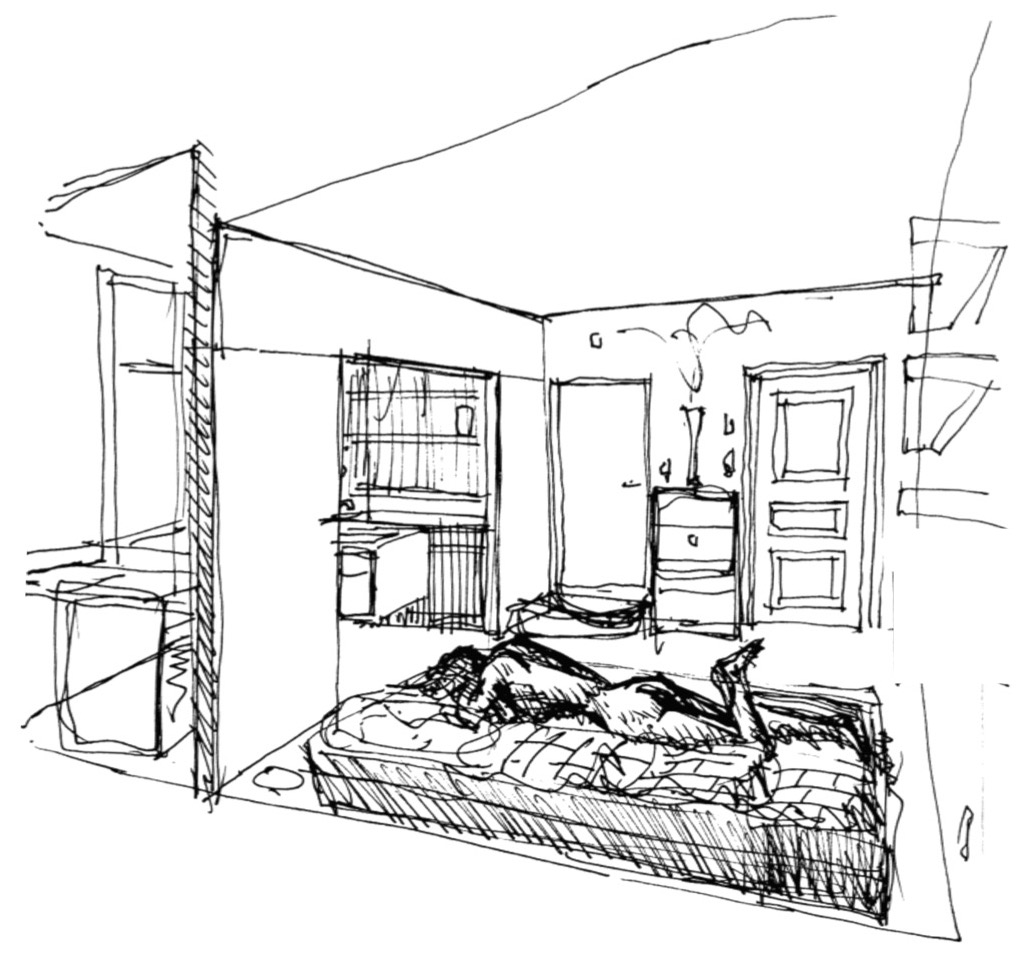
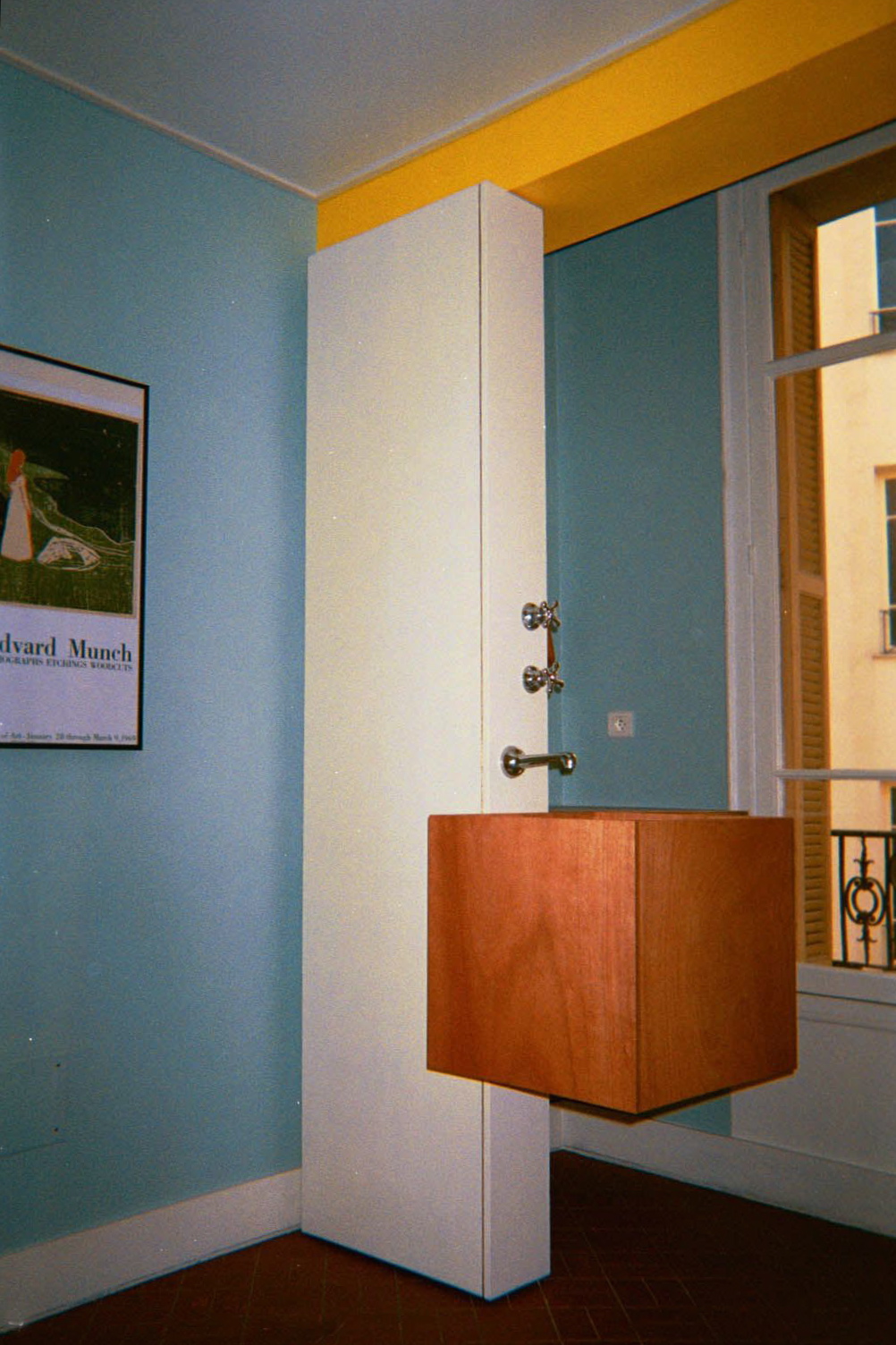

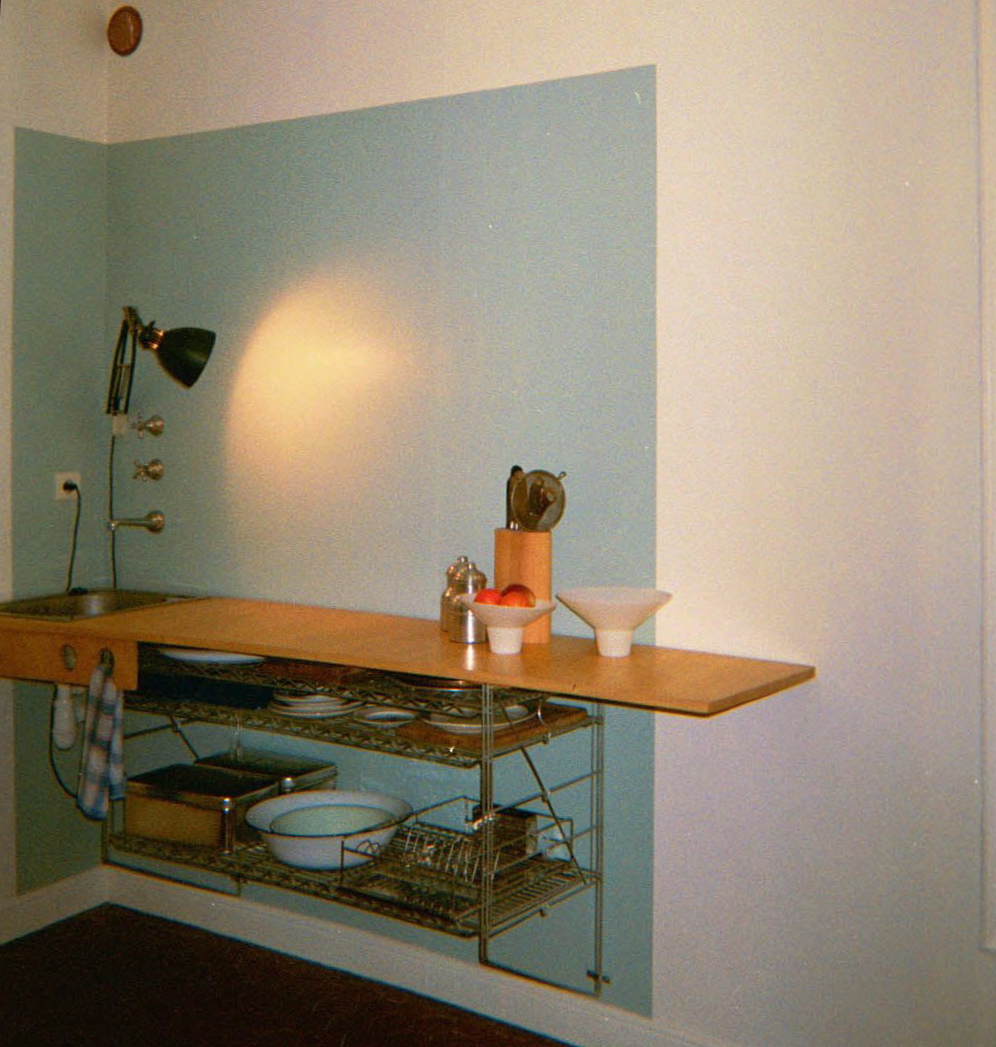
The fact that I would be physically making this space with my own bare hands, buying and carrying the material to do so, also radically influenced design choices & their development. The partition to contain the cooking corner became an ironing-board cupboard, the yellow bulkhead a concealed shelf, both giving access to dissimulated pipe-runs. In open position the plane of the swing door to the WC made redundant the symmetrically correspondent screen element of the sketches (framing the window). Even the glued marine ply cube for the sink -cum-basin contains storage. Distancing this from the wall allows for a full-length bed, or table & chairs. (Both arrangements have been used.)
In this same logic, condemning a room’s daytime use, because allocated as bedroom, was absurd for generally single occupancy. By adjoining the front rooms and hiding the bed platform behind bookcases, further storage was gained below the bed platform. But the main gain is more ample space to live & work. Generous ceiling heights help !
There is something marvelous about the challenge of laying out a very small space for optimal living. Apart from the shared experience of caravans and boats, a roof-top garret in Milan, at via Meravigli 13, helped nurture a design preoccupation which is recurrent in many of my projects, including the recent PARIGI settee for our house in Paris.
Related or parent pages :
Architectural Studies (signatory)
 opus incertum