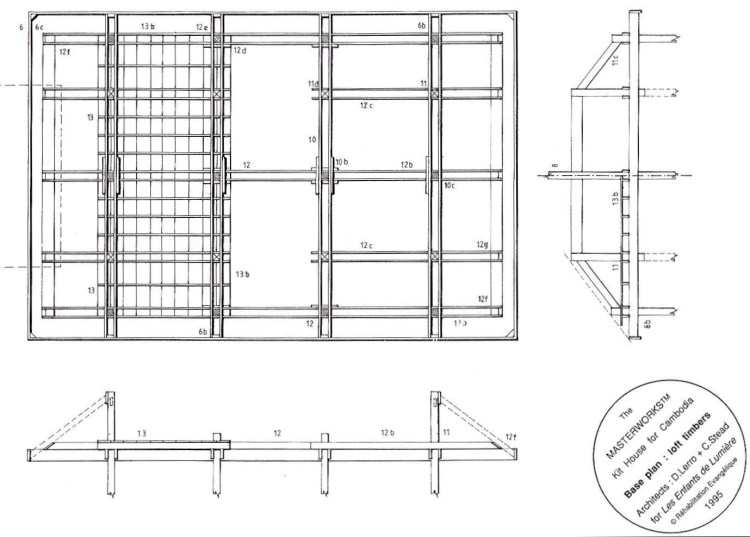
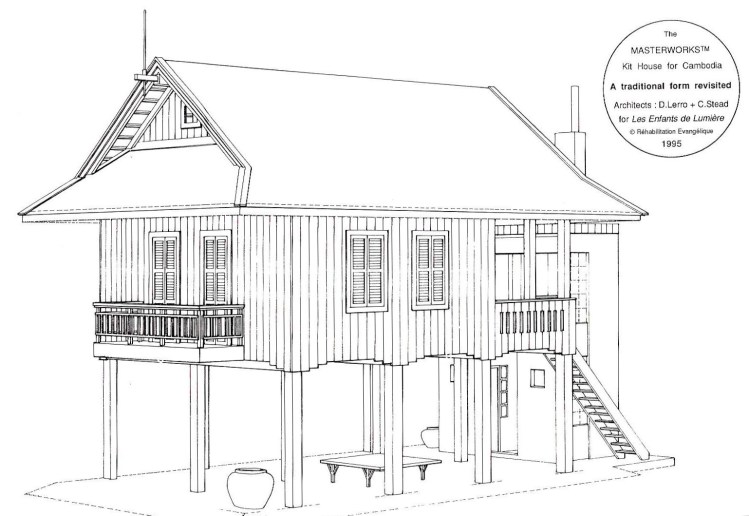
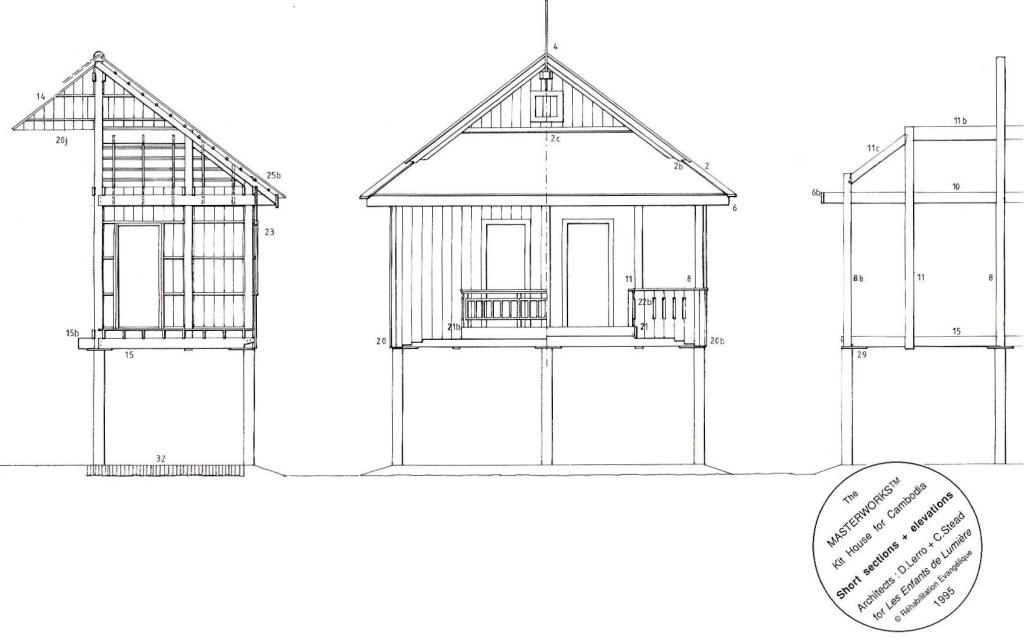
Born of extraordinary circumstances – the apparition one Saturday morning in Phnom Penh of a handful of Generals in uniform at the villa our associative client & host had hired for our mission duration – this case study was elaborated during a summer stay in Italy in discussion with the architect Mimmo LERRO, of Teano, Campania.
I had already surveyed local construction techniques in Cambodia for the planning application on behalf of a French NGO, Les Enfants de Lumière, at Satebo, Kandal Province.
Mr. CHAN, a Finance Ministry delegate, who had accompanied us on many occasions, and introduced us to top-level businessmen (who also turned out to be high-ranking officials, such as army Generals) was keen to work with me. He believed I might be persuaded to bring investors to his country and resolve many of his problems.
One of which was to determine to what good use might be put the ‘war booty’ stock-piled by such key individuals in pursuit of the Khmer Rouge resistance, hidden in the virgin forest. Fraying routes through that forest had left a lot of precious but internationally unsaleable hardwoods on their hands. They wondered if I might be able to use it for furniture. I suggested that, since every Khmer knew how to build their own house, but that the availability of cutting tools was an issue, milling standard lengths of these extremely resilient timbers would be an appropriate way to provide low-cost self-build housing for their own people, on a modular basis. It would also shift greater volumes of the material, and simply avoid a major export issue : guaranteed timber provenance (from eco-managed forests) that Western customers expect when they buy ligneous furniture.
The Generals & Mr. CHAN jumped at the idea, if only I would provide develop a proposal. The idea might also to provide a training opportunity in timber trades for the orphaned children that LEDL planned to help.
However, as actually happened while we were in Phnom Penh, closely-packed timber houses might spread fire if appropriate devices to contain the risk (cooking, rubbish bins, generators, electrical distribution etc.) were not integrated into the model design.
We therefore proposed an adjoining masonry shaft of clay brick construction to house these risk elements, and provide the hard support interface for utilities.
Related or parent pages :
Architectural Studies (co-signatory)
Humanity
 opus incertum